

Turnkey Graphite Ore Processing Line: Complete Beneficiation & Flotation Guide
Release time:
2026-10-09
Source:
GoFine
High-Efficiency Graphite Ore Processing Line: Plant Setup, Flotation Flowchart & Equipment
Graphite has become a critical strategic mineral driven by the surging global demand for lithium-ion battery anodes, refractory materials, and high-tech applications. However, natural graphite ores (both crystalline flake graphite and amorphous graphite) typically require sophisticated beneficiation processes to upgrade fixed carbon content from low-grade run-of-mine (ROM) ore (3%–12%) to high-purity graphite concentrate (90%–98%+).
Investing in an advanced, turnkey graphite ore processing line enables mining operators to maximize graphite flake size preservation, optimize carbon recovery rates, and minimize operational costs.
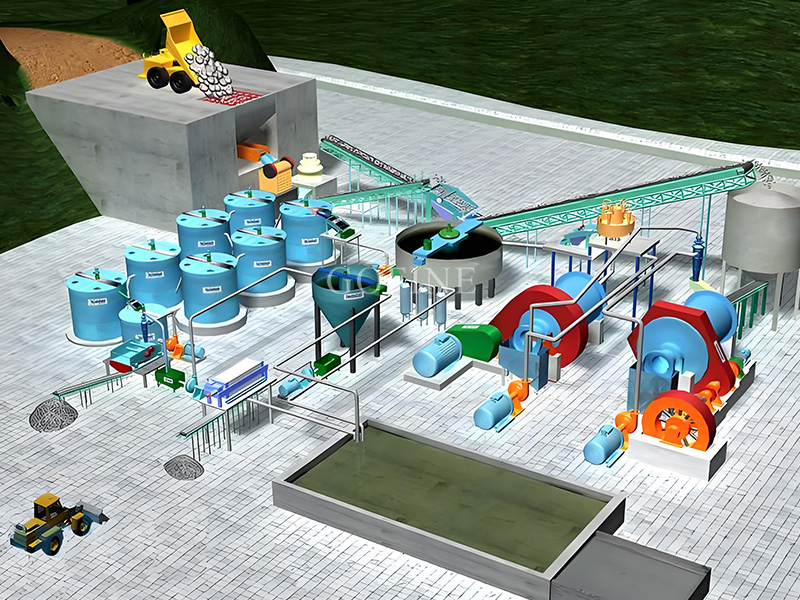
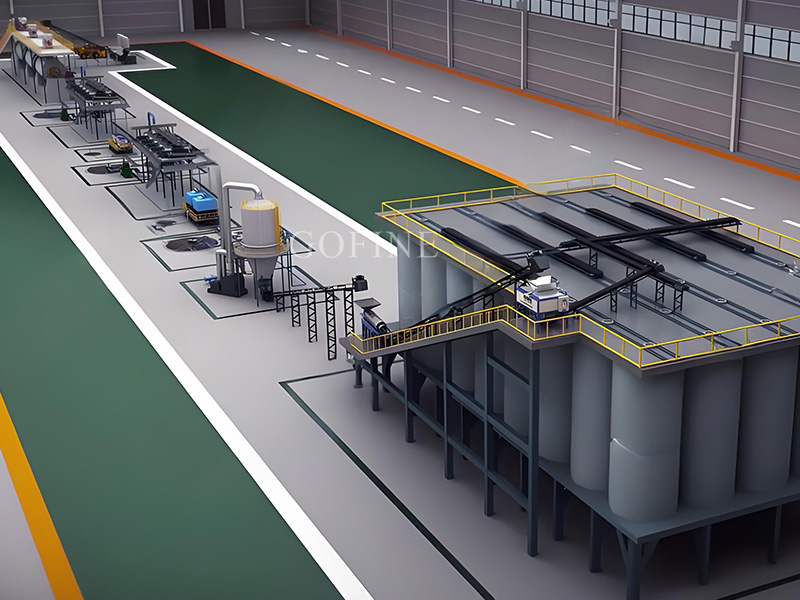
Step-by-Step Graphite Processing & Flotation Flowchart
Because graphite is naturally hydrophobic, froth flotation is the primary technique used for separation. The key technological priority in flake graphite beneficiation is protecting the large flakes from over-grinding while achieving high concentrate purity.
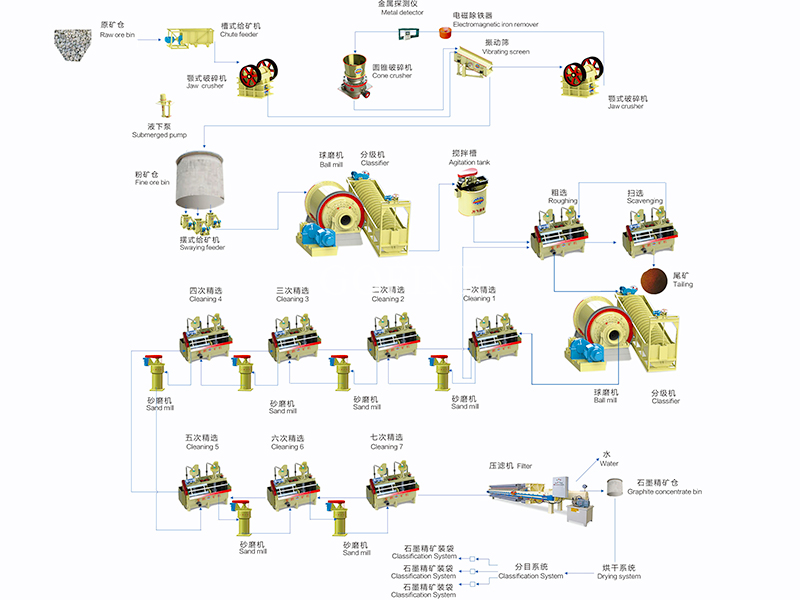
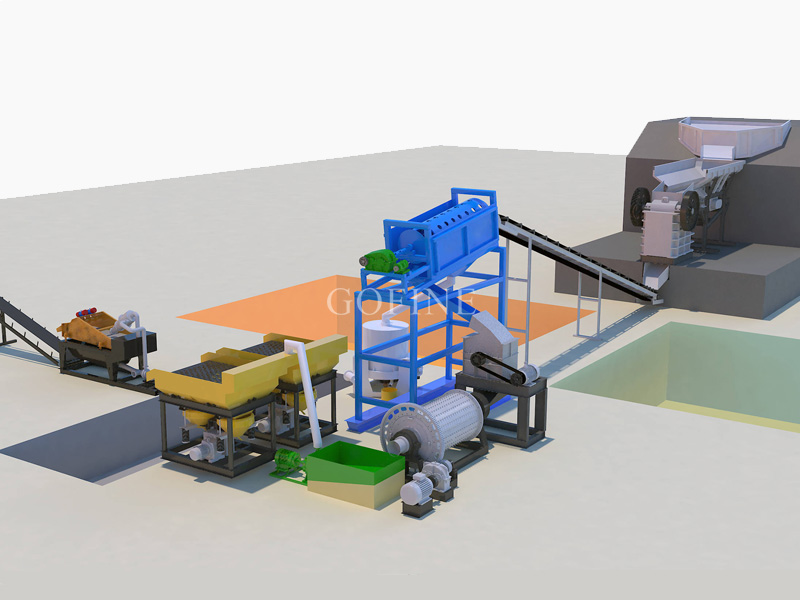
1. Crushing & Primary Grinding
-
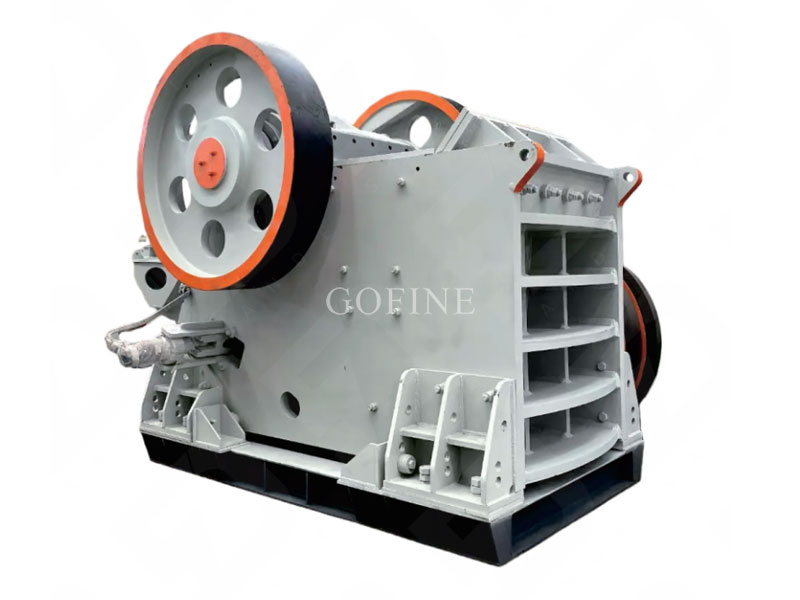
Crushing: ROM ore is reduced via a primary jaw crusher and secondary cone crusher to a manageable size (typically $<25\text{mm}$).
-
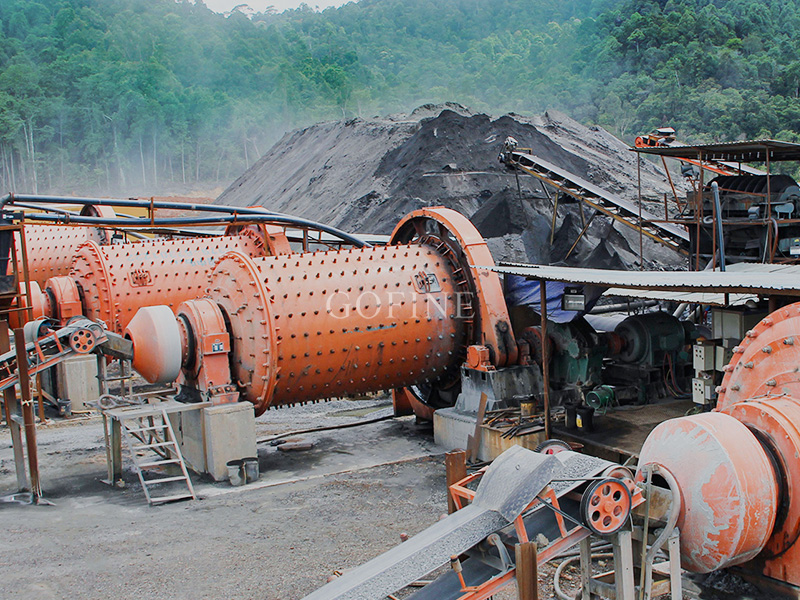
Primary Grinding: A ball mill working in a closed circuit with a spiral classifier or hydrocyclone liberates graphite monomers without pulverizing coarse flakes prematurely.
2. Multi-Stage Flotation & Regrinding (Core Technology)
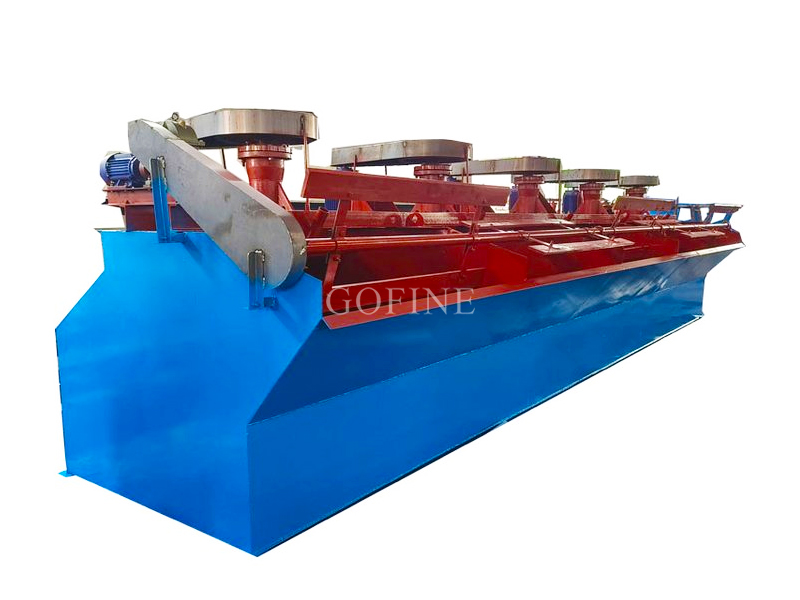
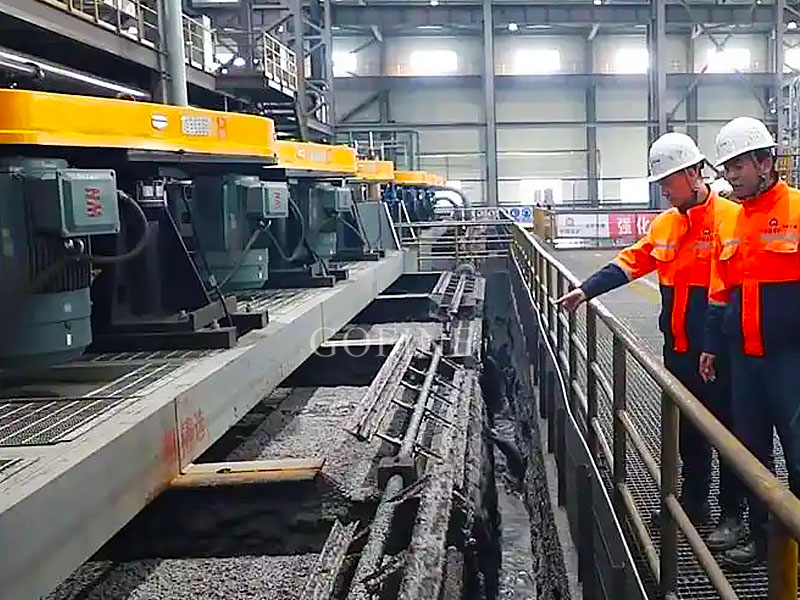
To achieve high purity without destroying valuable coarse flakes (+50 mesh, +80 mesh, +100 mesh), our plants utilize a multi-stage regrinding and multi-stage flotation circuit (typically 3–5 stages of regrinding and 4–6 stages of cleaner flotation):
-
Rougher Flotation: Collects fast-floating graphite particles using eco-friendly collectors (kerosene/diesel) and frothers (pine oil/MIBC).
-
Tower Mill / Stirred Mill Regrinding: Gently strips quartz and silicate gangue impurities off the graphite surface between flotation stages without reducing flake diameter.
3. Dewatering, Drying & Screen Classification
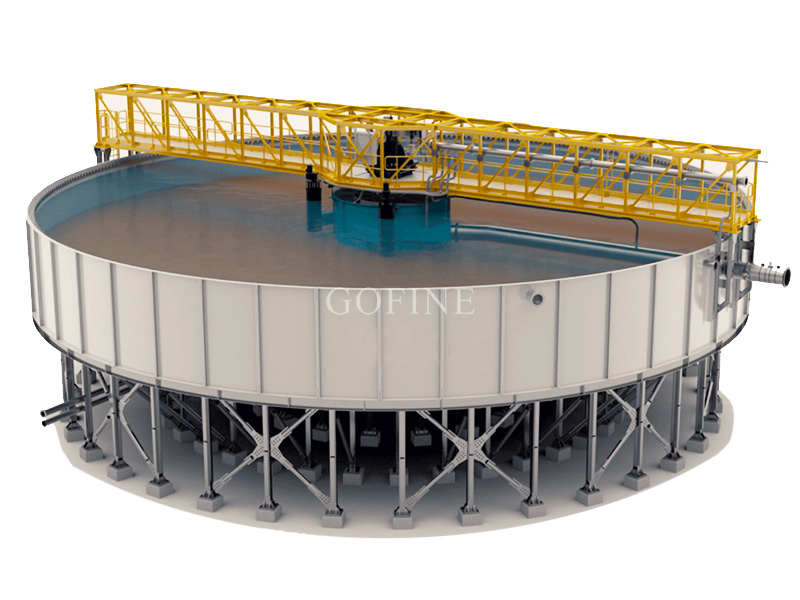
The high-grade graphite slurry passes through a high-efficiency thickener and a chamber filter press to reduce moisture content below 15%. A rotary dryer further reduces moisture to under 0.5%. Finally, vibrating screens classify the finished graphite concentrate into different mesh sizes for market distribution.
Key Equipment Specifications & Plant Capacity Options
We engineer customized graphite beneficiation plants ranging from pilot-scale 50 TPD (tons per day) setups to industrial 3,000+ TPD concentration complexes:
| Ore Processing Capacity | Primary Grinding Ball Mill | Flotation Cell Type | Target Concentrate Grade | Target Carbon Recovery Rate |
| 50 – 100 TPD | $\varnothing 1200 \times 2400\text{mm}$ | XCF/KYF Air-lift Cells | $90\% – 94\%$ Fixed C | $\ge 88\%$ |
| 200 – 500 TPD | $\varnothing 1830 \times 3000\text{mm}$ | SF/JJF Mechanical Cells | $94\% – 96\%$ Fixed C | $\ge 90\%$ |
| 1000 – 1500 TPD | $\varnothing 2700 \times 4000\text{mm}$ | Pneumatic / Column Flotation | $95\% – 97\%$ Fixed C | $\ge 92\%$ |
| 2000 – 3000+ TPD | Semi-Autogenous / $\varnothing 3200+$ | Flotation Columns + Stirred Mills | $96\% – 98\%+$ Fixed C | $\ge 93\%$ |
Why Choose Our Turnkey Graphite Processing Solutions?
-
Flake Size Protection Technology: Our multi-stage regrind flowsheets preserve up to 85%+ of large flakes (+100 mesh), maximizing market valuation for battery-grade precursor production.
-
Advanced Eco-Friendly Flotation Reagents: Customized reagent formulas lower chemical consumption while meeting strict European and North American environmental standards.
-
Tailings Dewatering & Zero-Discharge Water Recycling: Integrated thickeners and filter presses allow up to 90% of process water to be recycled back into the mill circuit.
-
Full EPC Turnkey Services: From metallurgical sample testing, mineral processing flowsheet design, equipment manufacturing, to on-site commissioning and global engineering support.
Frequently Asked Questions (FAQ)
Q: What is the difference in processing amorphous graphite versus flake graphite?
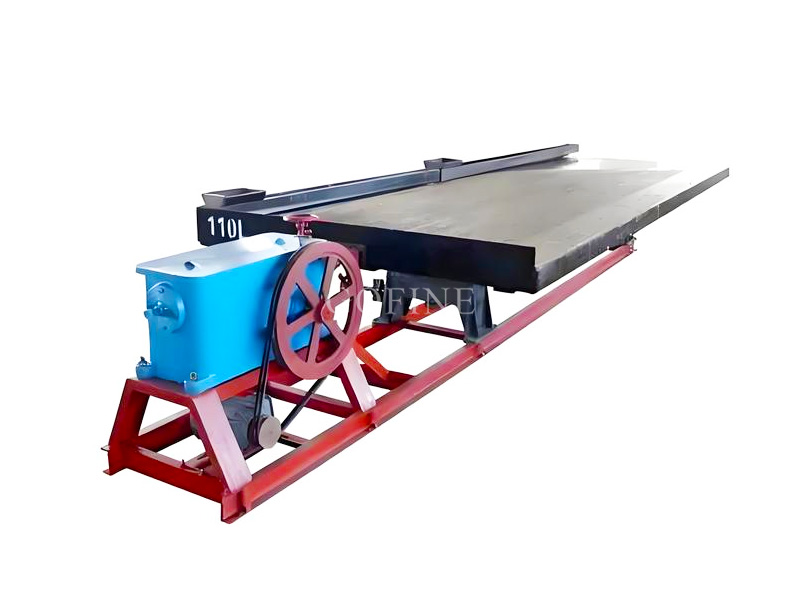
A: Flake graphite relies heavily on multi-stage regrinding and flotation to preserve large flake sizes. Amorphous (microcrystalline) graphite has extremely fine crystal sizes, requiring finer primary grinding and specialized flotation cell agitation or gravity/magnetic separation methods.
Q: What fixed carbon (FC) grade can your graphite processing line achieve?
A: Our standard multi-stage flotation circuit produces $94\%–97\%$ Fixed Carbon (FC) concentrate. For spherical graphite anode feedstock requiring $99.95\%$ FC, we integrate downstream chemical leaching or thermal purification units.
Q: What is the typical lead time for a complete 500 TPD graphite processing plant?
A: Flowsheet design and equipment manufacturing require 60–90 days. On-site foundation work, steel structure assembly, piping installation, and commissioning typically take 40–60 days.
Request Your Custom Mineral Test & Flowsheet Design Today!
Planning to build or upgrade your graphite ore processing plant? Contact our mineral processing engineers today to receive a comprehensive metallurgical testing proposal, CAD plant layout, and detailed equipment quotation tailored to your ore body.
Product Inquiry

Contact us
Address: Wulong Industrial Park, Xingyang City, Zhengzhou City, Henan Province
Contact:Richard
Phone:+86 151 3866 6240
Mail:richard@zzgofine.com
Online consultation
Copyright © 2027 All Rights Reserved.