
50–800TPD Spodumene Line DMS & Flotation Integrated System
Release time:
2026-07-04
Source:
GoFine
Medium and small-scale spodumene mining projects dominate emerging lithium resource markets across Africa, Southeast Asia and South America, requiring flexible, cost-effective and high-efficiency beneficiation solutions. Traditional single flotation systems suffer from high reagent consumption, fine ore waste and low processing efficiency for coarse spodumene particles, while standalone DMS (Dense Media Separation) equipment cannot meet battery-grade concentrate purity standards for fine-grained lithium minerals. A 50–800TPD Spodumene Line DMS & Flotation Integrated System perfectly combines gravity separation and flotation beneficiation technologies, forming a dual-stage optimized processing circuit tailored for low-to-medium capacity hard rock lithium mines.
This integrated system covers flexible production capacity from 50TPD pilot scale to 800TPD commercial industrial scale, solving the core pain points of single-process spodumene beneficiation. It adopts DMS coarse gangue pre-removal to reduce flotation load, followed by precision flotation fine purification, realizing dual improvement of lithium recovery rate and concentrate grade. As a cost-efficient turnkey solution for small and medium spodumene mines, the DMS & flotation integrated system has become the mainstream choice for newly built and upgraded lithium processing projects worldwide.
Working Principle of DMS & Flotation Integrated Spodumene System
The 50–800TPD integrated spodumene processing system operates based on complementary physical and chemical separation mechanisms, making up for the limitations of single beneficiation technology and maximizing the utilization rate of spodumene ore resources.
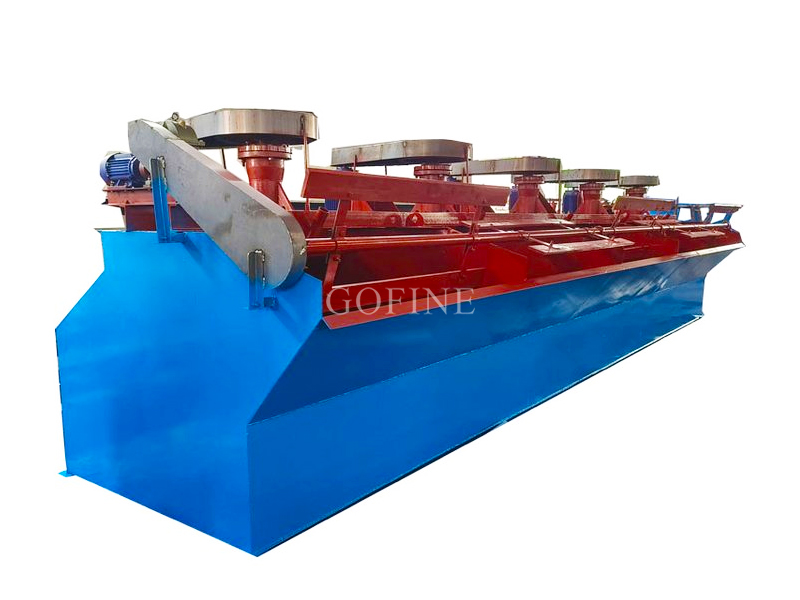
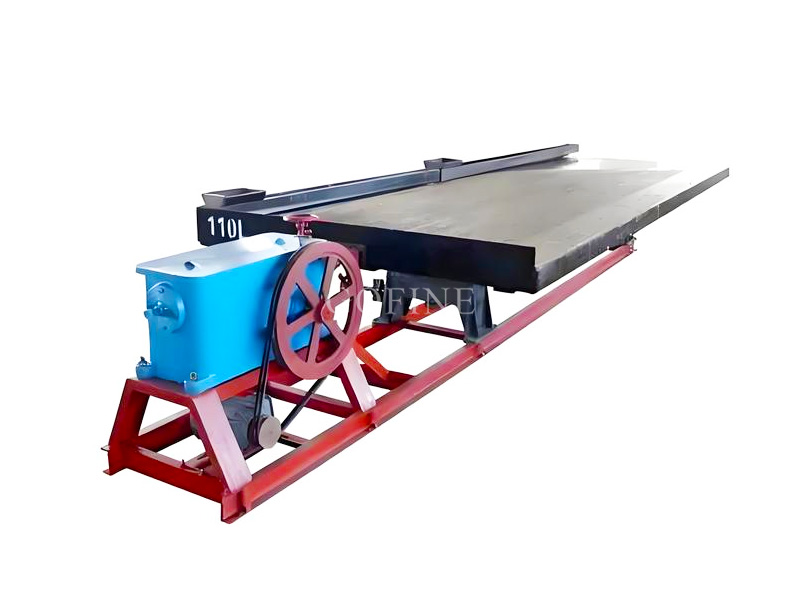
Dense Media Separation is a high-efficiency gravity separation technology for coarse spodumene particles. By configuring heavy medium slurry with specific gravity between spodumene and gangue minerals, the system quickly separates coarse lithium-bearing particles from quartz, feldspar and rock gangue. It removes over 40% of bulk waste rock in advance, greatly reducing subsequent grinding and flotation processing pressure. After DMS pre-concentration, the qualified coarse concentrate enters the flotation circuit for deep purification.
Flotation technology targets fine-grained spodumene particles that cannot be effectively separated by DMS. Through intelligent pulp pH adjustment and targeted reagent dosing, the system changes the surface hydrophobicity of fine lithium minerals, realizing precise separation of residual gangue and impurity minerals. The combination of DMS rough pre-separation and flotation fine purification forms a scientific graded beneficiation logic, adapting to multi-particle-size mixed spodumene ore and significantly improving overall lithium beneficiation efficiency.
Complete Processing Flow of 50–800TPD DMS & Flotation Integrated Line
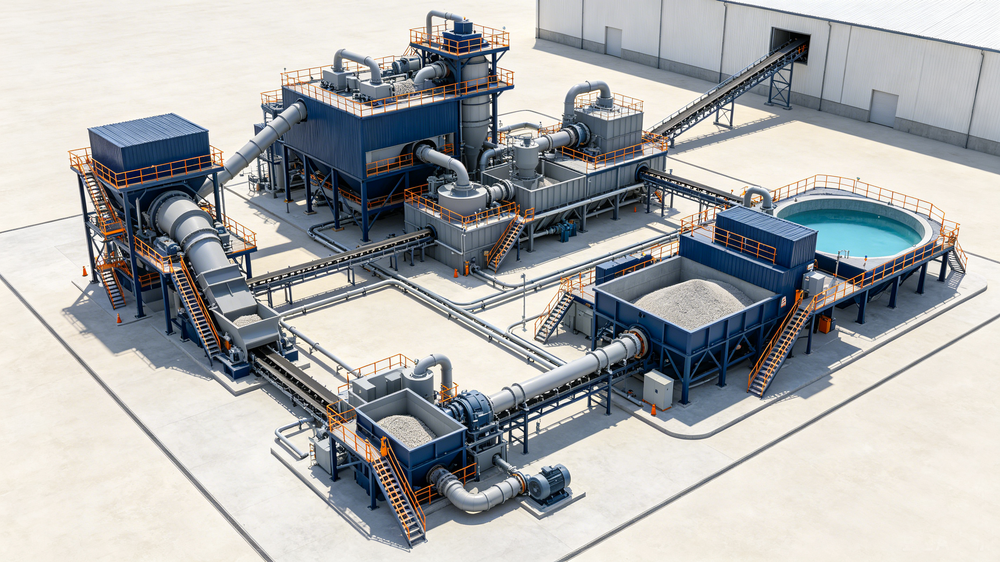
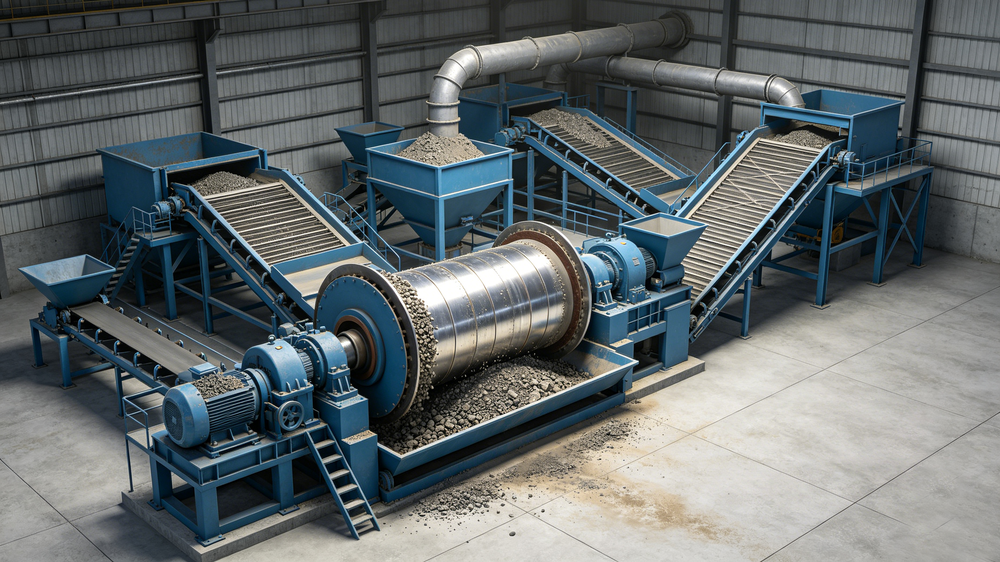
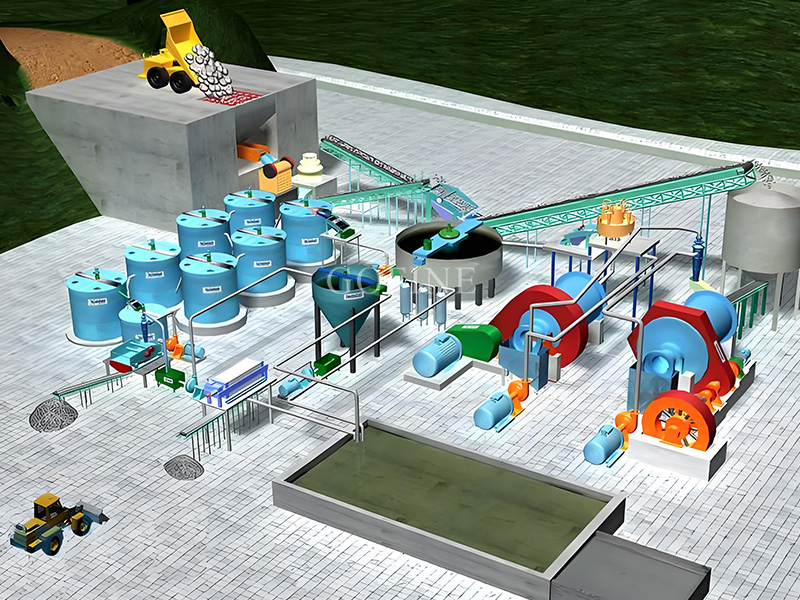
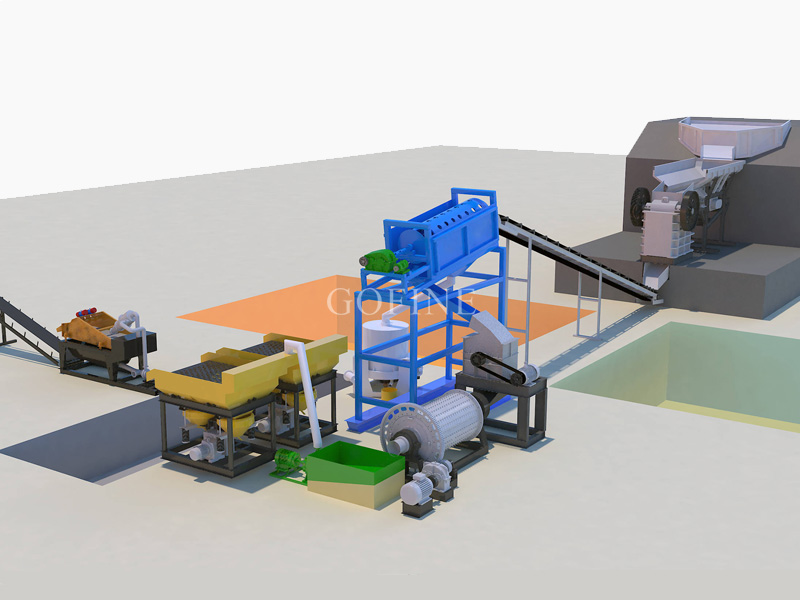
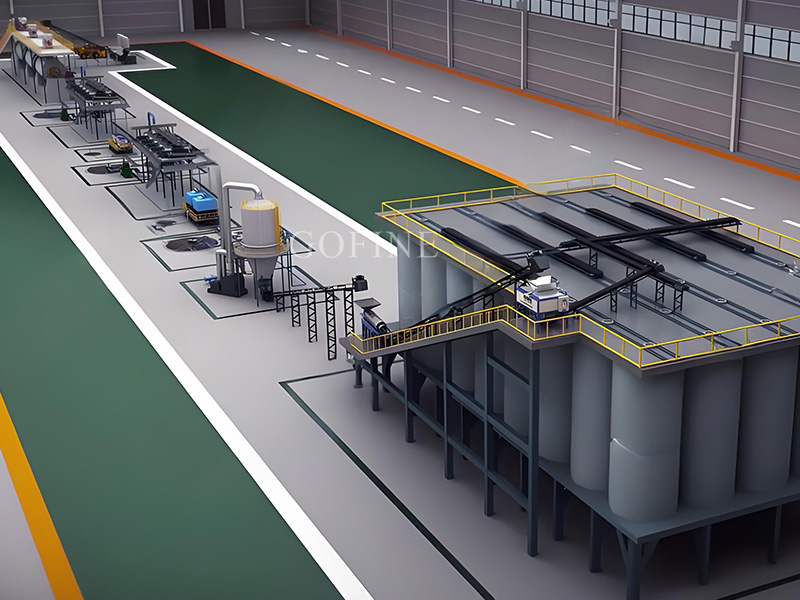
The integrated spodumene production line adopts a standardized graded processing workflow, matching DMS coarse separation and flotation fine purification links precisely for 50TPD to 800TPD variable capacity operation. The whole flow is closed-loop, low-loss and fully adaptable to various grades of hard rock spodumene ore.
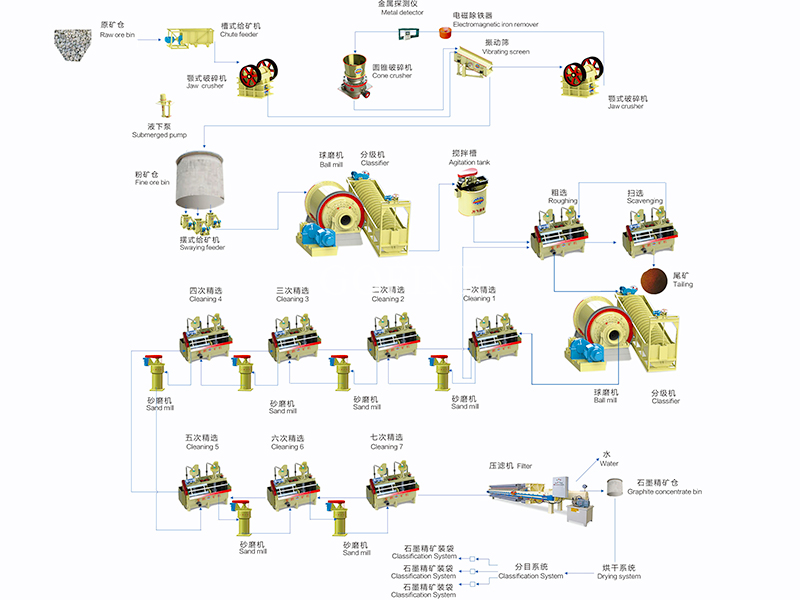
Raw ore feeding & screening → multi-stage coarse crushing → DMS heavy medium separation → bulk gangue removal → DMS concentrate fine crushing → closed-circuit grinding → hydrocyclone desliming → pulp conditioning → automatic reagent dosing → roughing flotation → scavenging flotation → multi-stage cleaning flotation → concentrate thickening → filter press dehydration → finished battery-grade spodumene concentrate → tailings dry stacking & medium recovery
A unique medium recovery module is equipped in the DMS section to recycle heavy medium slurry, reducing medium loss and operational costs. The pre-desliming process before flotation avoids reagent waste caused by fine clay slime absorption, further stabilizing the final Li₂O concentrate grade and lithium recovery rate.
System Capacity & Performance Parameter Table
The 50–800TPD DMS & flotation integrated spodumene line supports flexible capacity customization. The table below lists four mainstream standardized models, covering pilot, small, medium and medium-large commercial projects, with verified on-site operation data for global mine investor reference.
|
Daily Processing Capacity
|
Core Integrated Equipment Configuration
|
Final Li₂O Concentrate Grade
|
Comprehensive Lithium Recovery
|
Applicable Project Type
|
|
50TPD Pilot Line
|
Mini DMS cyclone, small flotation cell group, portable dosing machine, integrated thickener
|
5.7%–6.0%
|
82%–85%
|
Mine test projects, small-scale trial production
|
|
150TPD Compact Line
|
Standard DMS separation system, energy-saving flotation bank, automatic medium recovery device
|
5.9%–6.1%
|
85%–88%
|
Remote small spodumene mines, low-budget projects
|
|
400TPD Standard Commercial Line
|
High-precision DMS system, intelligent flotation control unit, online pulp monitoring system
|
6.0%–6.2%
|
88%–91%
|
Medium open-pit spodumene mines, concentrate export projects
|
|
800TPD Large Medium-Scale Line
|
Multi-unit DMS integrated system, full-automatic flotation circuit, closed water & medium circulation system
|
6.0%–6.3% Battery-grade
|
90%–93%
|
Regional lithium processing bases, mixed low-grade spodumene mines
|
Core Advantages of DMS & Flotation Integrated Spodumene System
Compared with single flotation or single DMS spodumene processing lines, the 50–800TPD integrated system has irreplaceable comprehensive advantages in beneficiation efficiency, operational cost and product stability, perfectly matching the operational characteristics of medium and small lithium mines.
Complementary Dual-Technology Beneficiation, Higher Overall Recovery
The DMS system efficiently removes bulk coarse gangue and low-grade waste rock, avoiding invalid grinding of massive gangue minerals. The subsequent flotation system precisely purifies fine-grained spodumene particles that DMS cannot separate. The dual-process collaboration solves the problem of coarse particle loss in pure flotation and fine particle impurity excess in pure DMS, increasing comprehensive lithium recovery by 6%–10% compared with traditional single-process lines.
Greatly Reduced Grinding & Flotation Operational Costs
DMS pre-separation removes a large amount of waste rock in advance, reducing the feeding volume of subsequent grinding and flotation links by 30%–40%. It effectively cuts grinding power consumption and flotation reagent dosage, avoiding serious reagent waste caused by excessive gangue absorption. For medium and small mines with limited profit margins, this integrated design significantly reduces daily operational costs and shortens investment payback cycles.
Stable Battery-Grade Concentrate Quality
The graded separation mode of coarse pre-separation and fine purification realizes step-by-step impurity removal. The DMS link removes bulk inert gangue, while the flotation link eliminates micro impurities such as mica and clay. The finished spodumene concentrate features low impurity content and stable Li₂O grade, fully meeting the raw material procurement standards of lithium carbonate and lithium hydroxide refining factories for battery manufacturing.
Flexible Capacity Adaptation & Modular Design
The 50–800TPD integrated system adopts modular assembly design, supporting free capacity adjustment within the rated range. Mine owners can adjust DMS processing volume and flotation unit operation quantity according to ore output changes. The reserved expansion interfaces support later capacity upgrade from 50TPD to 800TPD without overall equipment reconstruction, adapting to gradual mine reserve expansion.
Energy-Saving & Eco-Friendly Closed-Loop Operation
Equipped with professional medium recovery and process water circulation systems, the integrated line achieves over 85% medium recycling rate and 87% process water reuse rate, greatly reducing raw material and water resource consumption. The dry tailings disposal system realizes pollution-free discharge, fully complying with local environmental protection policies in global lithium mining areas, simplifying project environmental approval procedures.
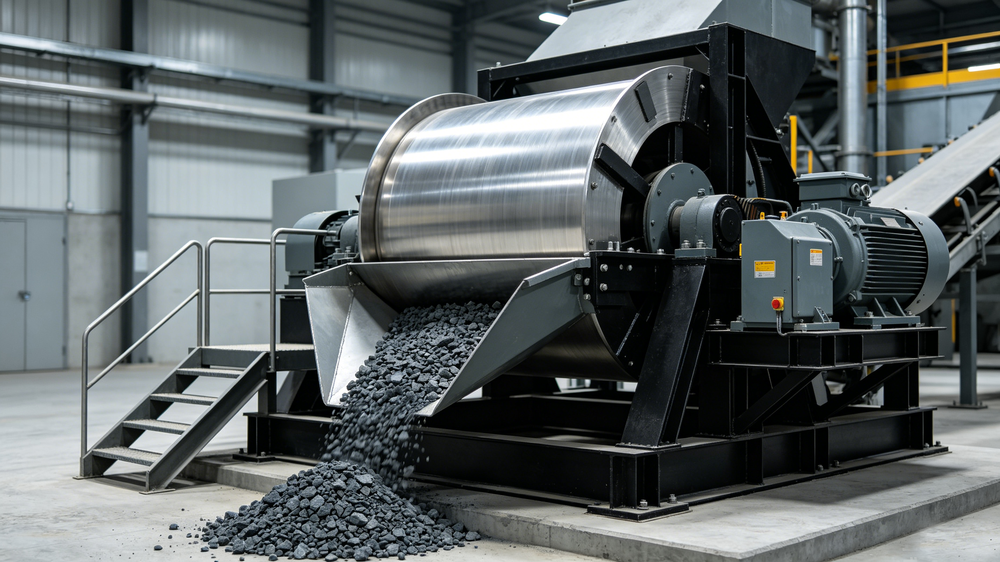
Full Turnkey Services for Integrated Spodumene Processing Projects
We provide one-stop EPC turnkey services for 50–800TPD Spodumene Line DMS & Flotation Integrated System, covering pre-project design, equipment manufacturing, on-site commissioning and after-sales maintenance, helping global medium and small mine investors quickly launch stable production.
Customized Ore Testing & Scheme Design
Free spodumene ore sample beneficiation tests are provided, including DMS gravity separation and flotation purification experiments. Professional engineers formulate exclusive dual-process matching parameters, plant layout and investment budget according to ore grade, particle size distribution and impurity characteristics, delivering targeted customized solutions for different mining conditions.
Factory Pre-Testing & Containerized Delivery
All DMS and flotation integrated equipment completes linkage trial operation in the factory before delivery to eliminate potential faults. Modular equipment is packaged in standard containers for convenient cross-border transportation and rapid on-site assembly, greatly shortening project construction and commissioning cycles.
Overseas On-Site Installation & Parameter Debugging
Professional overseas engineering teams complete full equipment assembly, pipeline docking and system debugging on-site. We optimize DMS medium density and flotation reagent ratio according to actual mine ore conditions, ensuring the system reaches the designed recovery rate and concentrate grade stably.
On-Site Training & Long-Term After-Sales Support
We provide professional operation and maintenance training for local workers, covering DMS system adjustment, flotation parameter control, daily equipment maintenance and common fault troubleshooting. Multilingual operation manuals and 24-hour remote technical support are available all year round, with global spare parts supply to guarantee long-term stable system operation.
Market Value & Development Prospect
With the rapid development of the global new energy industry, medium and small-scale spodumene mines have become important supplementary sources of global battery-grade lithium concentrate. Traditional single beneficiation processes can no longer balance recovery rate, product quality and operational cost.
The 50–800TPD Spodumene Line DMS & Flotation Integrated System, with its efficient dual-process beneficiation, flexible capacity adaptation and cost-saving advantages, has become the optimal solution for medium and small spodumene mine construction and upgrading. It helps mining enterprises maximize ore resource utilization, reduce comprehensive production costs, and provide stable high-quality lithium raw materials for the global lithium battery industry.
Frequently Asked Questions
Why integrate DMS and flotation for spodumene processing?
Single flotation has high reagent and power consumption, while single DMS cannot remove fine impurities. The integrated system combines the advantages of gravity separation and flotation, realizing low-cost rough separation and high-precision fine purification, achieving better economic and beneficiation indicators.
Is the integrated system suitable for low-grade spodumene ore?
Yes. The dual-stage beneficiation mode effectively activates and recovers low-grade scattered spodumene minerals, significantly improving the utilization rate of low-grade ore resources, which is very suitable for most medium and small low-grade spodumene mining projects.
Can the system adjust capacity flexibly between 50TPD and 800TPD?
The modular design supports flexible capacity adjustment. It can operate stably at low load of 50TPD for trial production and be quickly upgraded to 800TPD full-load commercial production according to market demand and ore reserve growth.
What is the advantage over traditional full-flotation spodumene lines?
It reduces 30%–40% flotation feeding volume, cuts reagent and power consumption significantly, and avoids fine mineral loss. The comprehensive lithium recovery is 6–10 percentage points higher than that of traditional full-flotation lines with lower overall operational costs.
Product Inquiry

Contact us
Address: Wulong Industrial Park, Xingyang City, Zhengzhou City, Henan Province
Contact:Richard
Phone:+86 151 3866 6240
Mail:richard@zzgofine.com
Online consultation
Copyright © 2027 All Rights Reserved.