

Rock Gold Beneficiation Plant | Hard Rock Gold Processing Flow Design
Release time:
2026-05-21
Source:
GoFine
Hard rock gold, also known as lode gold, is one of the most common and valuable gold deposit types in the global mining industry. Unlike placer gold that is already liberated by natural weathering, hard rock gold is tightly locked in solid rock formations such as quartz veins and sulfide matrices, requiring a scientific and systematic processing flow design to efficiently liberate, separate and recover gold. A reasonable hard rock gold processing flow design is not only the key to improving gold recovery rate and production efficiency but also the foundation for reducing operating costs and ensuring environmental compliance. This article will comprehensively elaborate on the core principles, key process stages, design considerations and optimization strategies of hard rock gold processing flow, providing practical guidance for mining enterprises looking to build or optimize their hard rock gold processing lines.
Core Principles of Hard Rock Gold Processing Flow Design
The design of hard rock gold processing flow is not a one-size-fits-all process; it must be based on the unique characteristics of the hard rock gold ore, adhering to three core principles to ensure the rationality and efficiency of the entire flow.
1. Ore Characteristics as the Fundamental Basis
Before designing the processing flow, a comprehensive metallurgical test of the hard rock gold ore is essential—it is like a medical diagnosis before surgery, providing critical data for the entire design process. Key test indicators include ore type (free-milling, sulfide-associated, or refractory), gold particle size, liberation size, gold grade, associated minerals (such as pyrite, arsenopyrite), and deleterious elements (such as preg-robbing carbon) that may interfere with processing. For example, free-milling hard rock gold ore (where over 90% of gold can be recovered by conventional gravity-cyanidation) requires a simpler flow, while refractory ore with ultra-fine disseminated gold particles needs a more complex combined process.
2. Maximizing Gold Recovery Rate
The primary goal of hard rock gold processing flow design is to maximize gold recovery rate while minimizing gold loss at each stage. This requires optimizing the connection between each process link, selecting appropriate separation technologies, and ensuring that gold particles—whether coarse or fine—are fully recovered. For instance, prioritizing gravity concentration for ores with coarse free-milling gold can recover 40%-60% of gold early in the process, reducing the load on subsequent chemical processing and improving overall recovery.
3. Balancing Efficiency, Cost and Environmental Protection
A high-quality processing flow design must strike a balance between production efficiency, operating costs and environmental compliance. It should adopt energy-saving equipment and optimized processes to reduce power consumption and reagent usage, while also incorporating closed-circuit circulation systems to minimize environmental pollution. For example, the cyanide leaching process can be designed with a closed circulation system to recycle cyanide, reducing both costs and environmental impact.
Key Stages of Hard Rock Gold Processing Flow Design
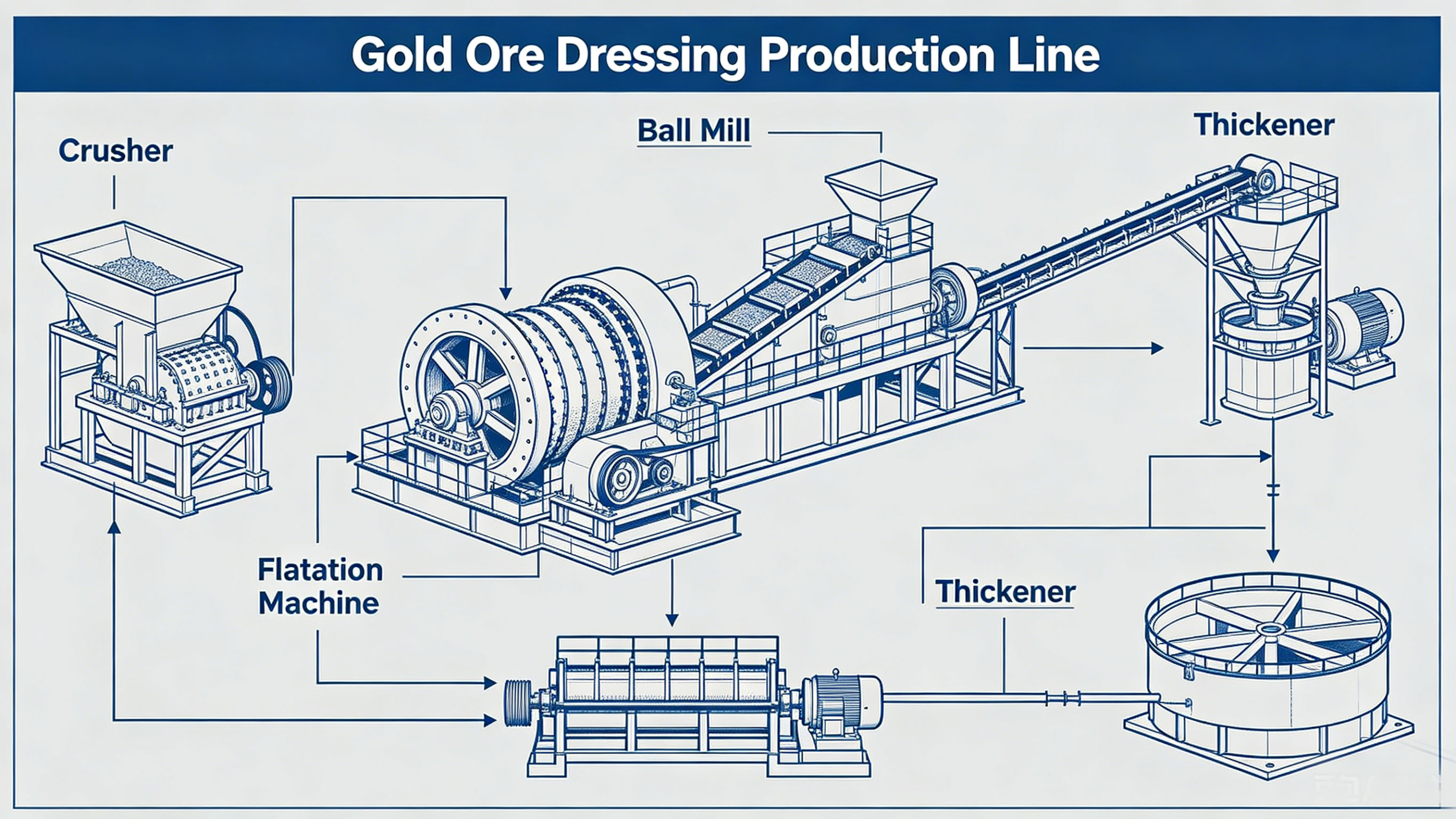
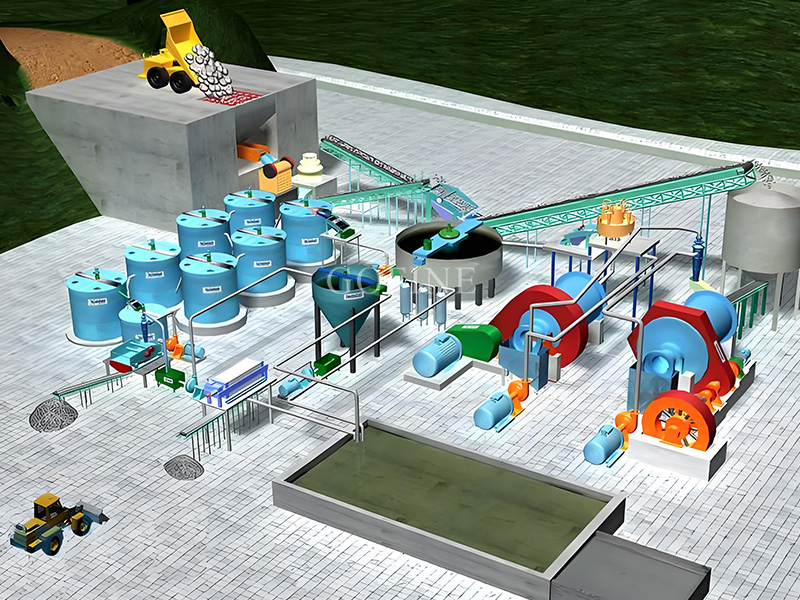
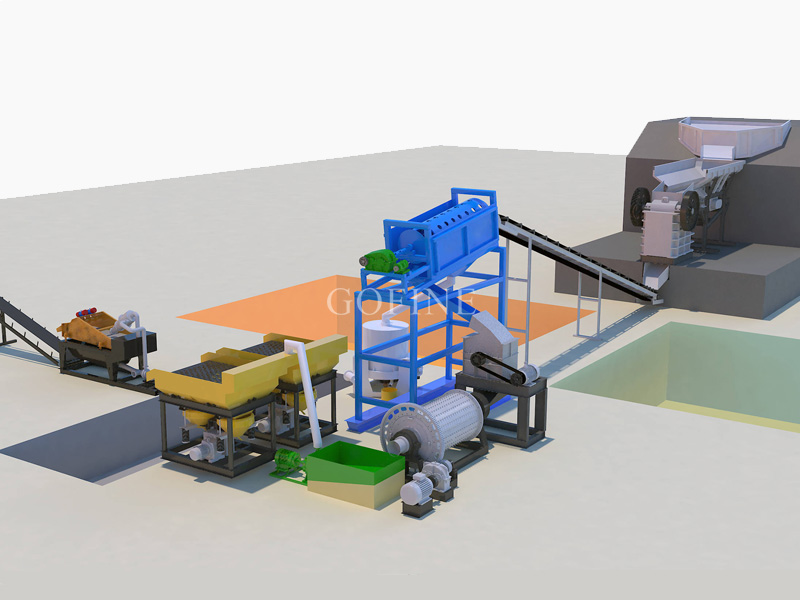
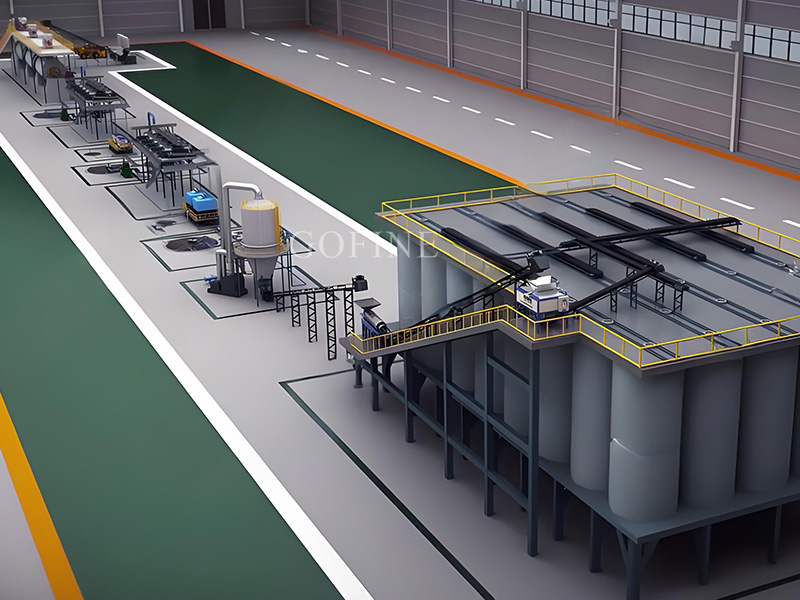
The hard rock gold processing flow typically consists of four core stages: ore pretreatment, comminution (crushing and grinding), gold separation, and gold purification. Each stage is closely linked, and the design of each link directly affects the overall processing effect and gold recovery rate.
1. Ore Pretreatment: Preparation for Gold Liberation
Ore pretreatment is the first step in hard rock gold processing, mainly to remove impurities and adjust the ore properties to lay the foundation for subsequent comminution and separation. The key operations include:
– Ore Sorting: Use intelligent ore sorting equipment to separate waste rock (gangue) from gold-bearing ore based on differences in density, color, or conductivity. This reduces the amount of ore entering the subsequent process, lowering processing costs and improving efficiency. For low-grade hard rock gold ore, ore sorting can significantly increase the ore grade before comminution.
– Moisture and Clay Treatment: If the hard rock ore contains high moisture or clay, it may cause blockages in crushing and grinding equipment. The design should include drying or scrubbing links (such as using trommel scrubbers) to break down clay agglomerates and remove excess moisture, ensuring smooth operation of the subsequent process.
2. Comminution (Crushing & Grinding): Core for Gold Liberation
Hard rock gold is locked in the rock matrix, so comminution—including crushing and grinding—is the core stage to liberate gold particles. The design of this stage focuses on controlling the particle size to ensure that gold particles are fully dissociated from gangue without over-grinding (which increases costs and causes gold loss).
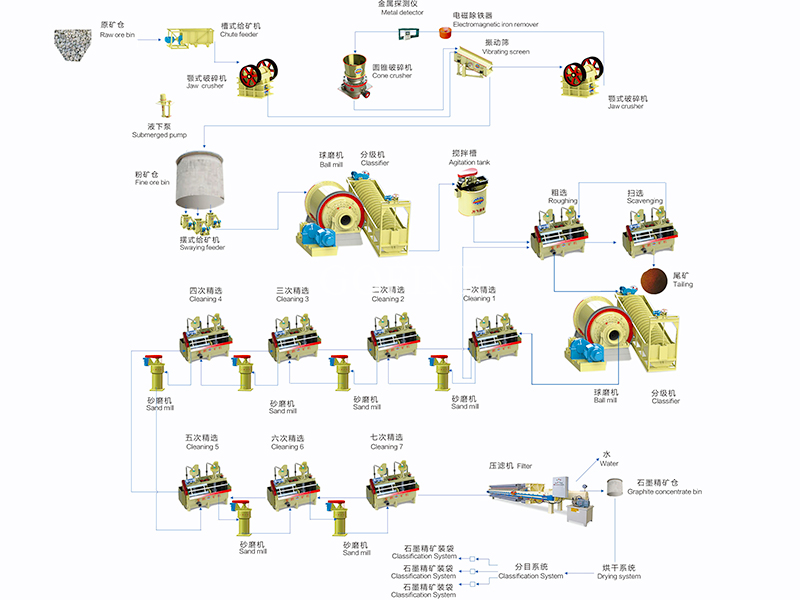
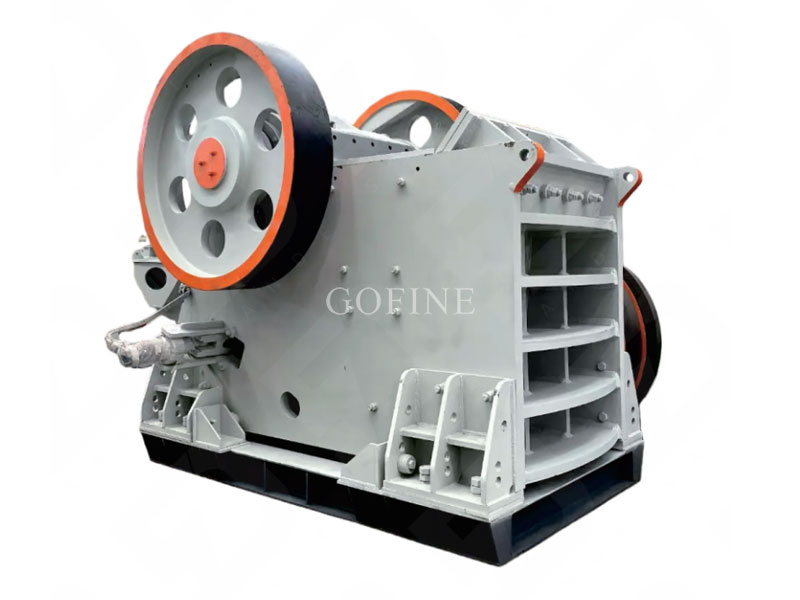
– Crushing Process: Usually adopts a three-stage closed-circuit crushing flow: primary crushing (jaw crusher or gyratory crusher) reduces run-of-mine ore (up to 600mm) to 100-150mm; secondary crushing (cone crusher) further reduces it to 10-30mm; tertiary crushing (short-head cone crusher or impact crusher) adjusts the particle size to ≤10mm, ensuring uniform feeding for grinding. The closed-circuit design (combining crushers with vibrating screens) ensures that unqualified particles are re-crushed, improving crushing efficiency.
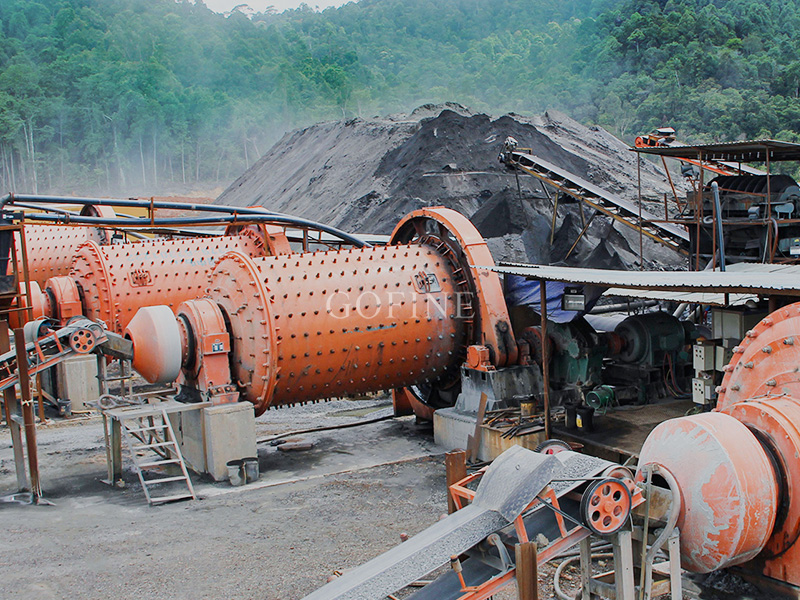
– Grinding Process: Adopts a closed-circuit system composed of ball mills (or rod mills) and hydrocyclones (or spiral classifiers). The ore is ground to the required fineness—for free-milling ore, 60%-80% of particles pass 200 mesh (75μm); for refractory ore, more than 85% pass 200 mesh—to ensure full liberation of gold particles. New technologies such as microwave pretreatment can be incorporated to pre-crack the ore, reducing grinding energy consumption by 20%-30% and improving liberation efficiency.
3. Gold Separation: Key to Improving Recovery Rate
Gold separation is the core link of hard rock gold processing, and the choice of separation method depends on the ore characteristics (gold particle size, association with other minerals). Common separation methods include gravity separation, flotation, and cyanidation (CIP/CIL), which are often used in combination for better results.
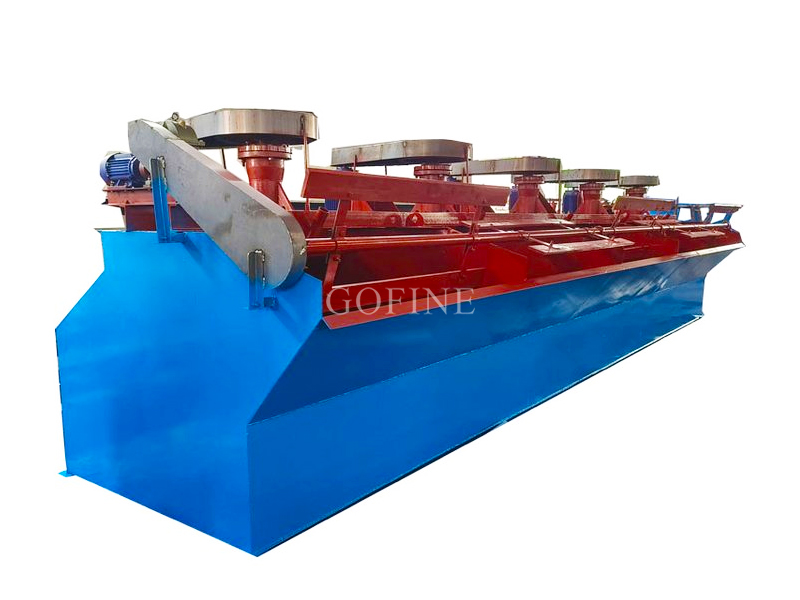
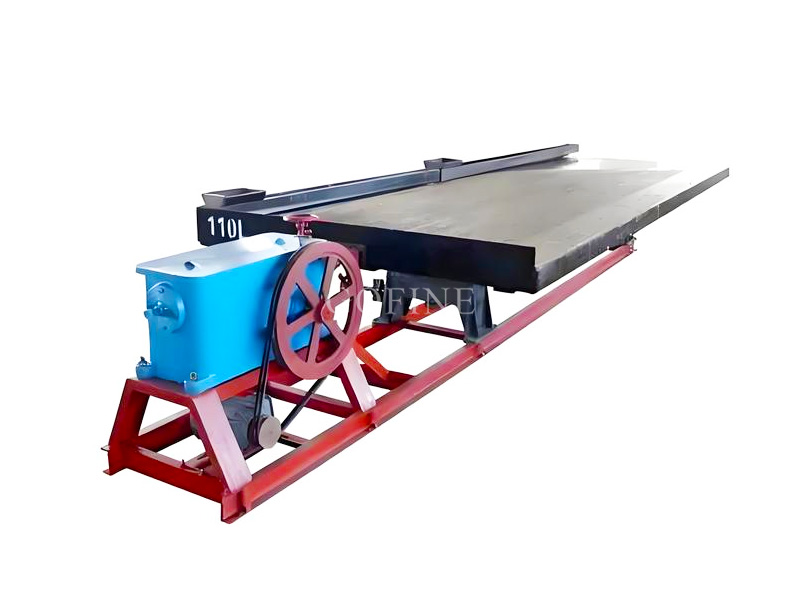
– Gravity Separation: Suitable for coarse free-milling hard rock gold (particle size >0.1mm). It utilizes the density difference between gold (19.3g/cm³) and gangue (around 2.65g/cm³) to separate gold through gravity fields or centrifugal force. Core equipment includes centrifugal concentrators (Knelson, Falcon), shaking tables, and jiggers. This method is low-cost, chemical-free, and can recover 40%-60% of gold early, reducing the load on subsequent processes.
– Flotation: Suitable for sulfide-associated hard rock gold, where gold is closely associated with sulfide minerals (pyrite, arsenopyrite). By adding reagents (collectors, frothers, regulators), gold-bearing sulfides are adsorbed onto air bubbles and floated, separating from gangue. The design includes roughing, scavenging, and cleaning stages to improve the grade of gold concentrate (usually 50-70g/t) and recovery rate (80%-90%).
– Cyanidation (CIP/CIL): Suitable for fine-grained hard rock gold and refractory ore. After grinding, the ore pulp is adjusted, and cyanide solution and lime are added for leaching. CIP (carbon in pulp) and CIL (carbon in leach) processes use activated carbon to adsorb gold from the pulp, with a total recovery rate of over 95%. For refractory ore, a combined process of flotation roasting + cyanidation or bacterial oxidation + cyanidation is designed to break down sulfide structures and expose gold particles, increasing the leaching rate to 85%-90%.
4. Gold Purification: Ensuring High Purity
After separation, the gold concentrate or loaded carbon needs to be purified to obtain high-purity gold ingots. The design of this stage focuses on reducing gold loss and improving product purity:
– Desorption and Electrolysis: Loaded carbon from CIP/CIL processes is desorbed at high temperature and pressure to obtain precious liquid, then gold mud is obtained through electrolytic refining or zinc powder replacement. This step ensures that gold is fully separated from the carbon matrix.
– Smelting and Refining: Gold mud is smelted with flux (borax, quartz sand) in an intermediate frequency induction furnace to remove impurities, then electrolytically refined to obtain gold ingots with a purity of 99.99% (national standard No. 1 gold). The entire purification process is designed to be closed-circuit to avoid gold loss and environmental pollution.
Key Considerations in Hard Rock Gold Processing Flow Design
To ensure the rationality, stability and profitability of the processing flow, the following key factors must be considered during design:
1. Ore Characteristics and Metallurgical Test Data
As mentioned earlier, detailed metallurgical testing is the foundation of flow design. Without accurate data on ore properties (liberation size, gold character, reagent consumption), any design is guesswork, which may lead to low recovery rates and catastrophic investment losses. Mining enterprises should send ore samples to professional laboratories for comprehensive testing before designing the flow.
2. Scalability and Flexibility
The processing flow design should have strong scalability to adapt to changes in ore grade and processing scale. For example, modular design allows enterprises to increase or decrease equipment according to production needs, avoiding the need for large-scale reconstruction when expanding production. At the same time, the flow should be flexible enough to switch between different separation methods according to changes in ore characteristics (e.g., from gravity separation to flotation when processing sulfide-associated ore).
3. Equipment Matching and Efficiency
The selection and matching of equipment directly affect the efficiency of the processing flow. The design should choose high-efficiency, energy-saving and stable equipment that matches the ore characteristics and processing scale. For example, jaw crushers are suitable for primary crushing of hard rock, while cone crushers are more suitable for secondary/tertiary crushing; ball mills with intelligent control systems can adjust grinding parameters in real-time to ensure grinding fineness. In addition, the processing capacity of each equipment should be matched to avoid bottlenecks in the flow.
4. Environmental Protection and Compliance
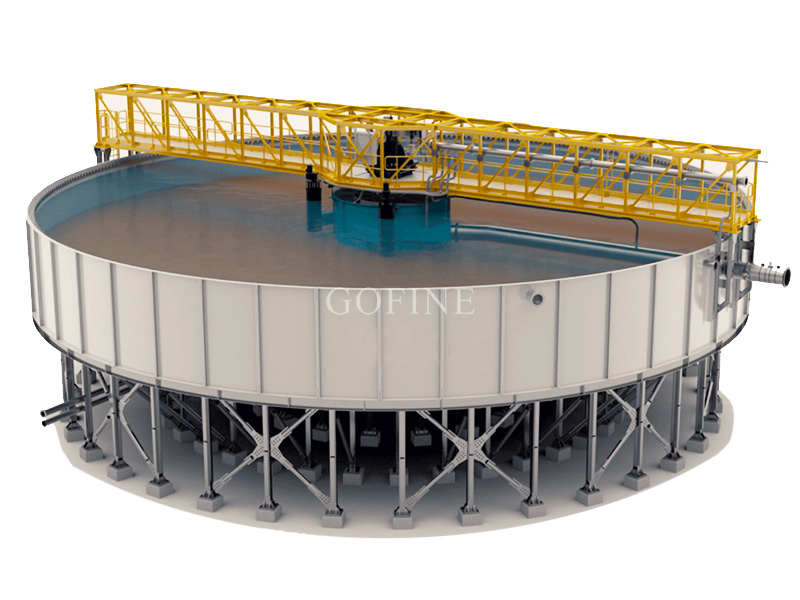
With the increasing strictness of global environmental protection policies, environmental protection design has become an indispensable part of hard rock gold processing flow. The design should include tailings treatment (dehydration, concentration, comprehensive utilization as building materials), wastewater recycling (closed-circuit circulation of leaching wastewater), and waste gas treatment (collection and purification of flotation reagents) to meet the environmental protection standards of various countries. For example, non-cyanide leaching reagents (such as thiosulfate) can be used in environmentally sensitive areas to replace cyanide.
5. Cost Control
Cost control runs through the entire flow design, including equipment investment, energy consumption, reagent consumption and labor costs. The design should optimize the process to reduce redundant links (e.g., combining roughing and scavenging in flotation if possible), adopt energy-saving equipment to reduce power consumption, and optimize reagent dosage based on metallurgical test data to reduce chemical costs. For example, gravity separation can reduce the amount of reagents used in subsequent cyanidation, lowering operating costs.
Optimization Strategies for Hard Rock Gold Processing Flow Design
With the continuous development of mining technology, the hard rock gold processing flow can be continuously optimized to further improve recovery rate, reduce costs and enhance competitiveness. Common optimization strategies include:
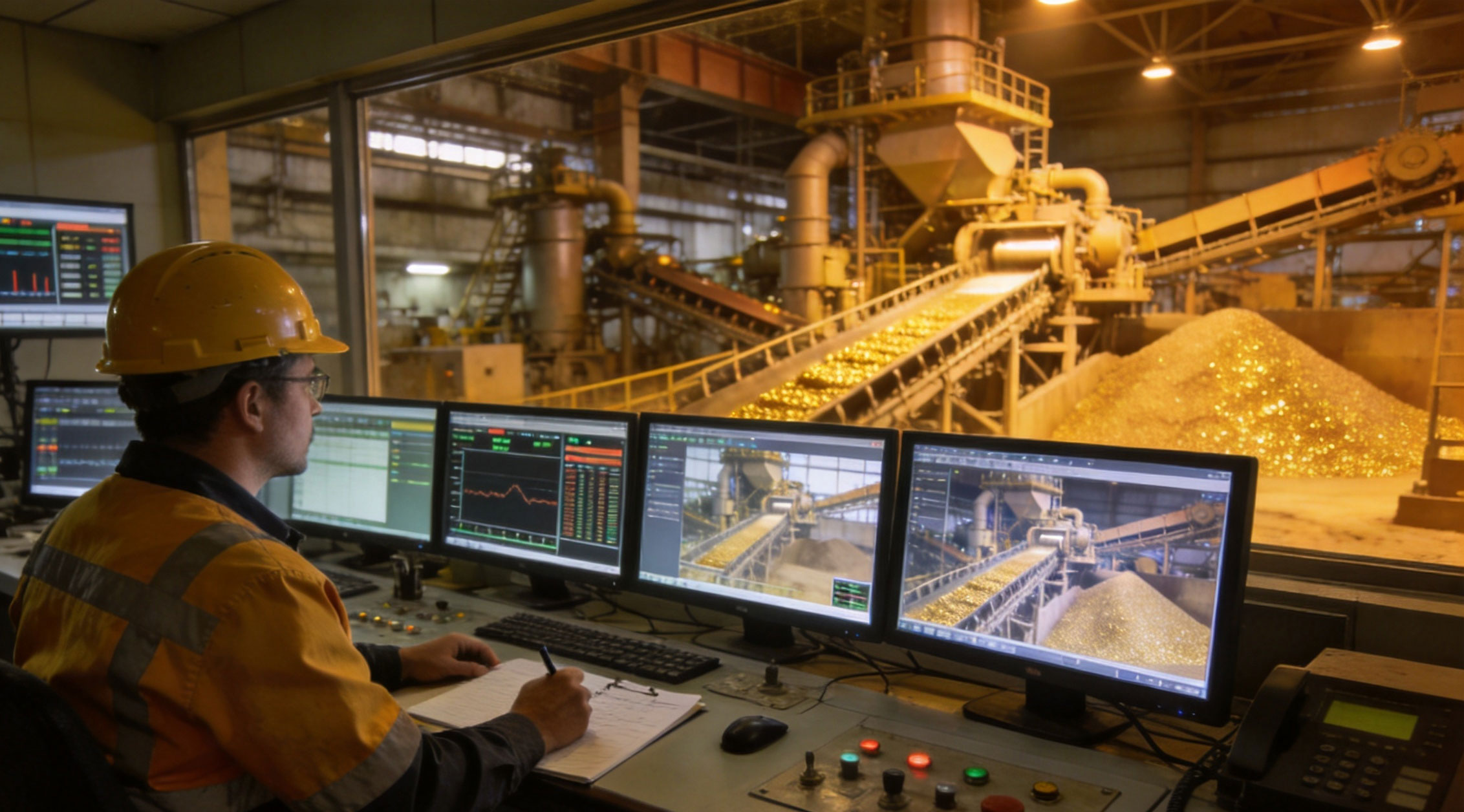
1. Intelligent Control and Digitalization
Introduce an intelligent control system to real-time monitor key parameters of each process (grinding fineness, reagent dosage, leaching time, pH value, etc.), and automatically adjust equipment operation parameters according to changes in ore composition. This avoids human operation errors, stabilizes the recovery rate, and reduces labor costs. In addition, digital twin technology can be used to simulate the entire processing flow, optimizing equipment linkage and improving overall efficiency.
2. Combined Process Optimization
For complex hard rock gold ore (e.g., refractory ore with high arsenic, high sulfur), optimize the combined process to improve recovery rate. For example, adopt a “gravity separation + flotation + CIL” combined process: gravity separation recovers coarse gold, flotation enriches sulfide-associated gold, and CIL recovers fine-grained gold, maximizing the overall recovery rate. For low-grade ore, heap leaching can be combined with CIP to reduce processing costs while ensuring recovery rate.
3. New Technology and Equipment Application
Adopt new technologies and equipment to optimize the processing flow. For example, microwave pretreatment technology can pre-crack hard rock ore, reducing grinding energy consumption and improving gold liberation efficiency; high-efficiency flotation machines with rotor-stator systems can improve the flotation effect of fine-grained gold; non-cyanide leaching technology can replace traditional cyanidation, reducing environmental risks and meeting strict environmental protection requirements.
4. Tailings Comprehensive Utilization
Optimize the tailings treatment process to realize comprehensive utilization of tailings, reducing environmental pollution and increasing additional benefits. For example, tailings can be used as building materials (concrete aggregates, roadbed materials), or reprocessed to recover residual gold and associated valuable metals (silver, copper), improving resource utilization rate.
Conclusion
The design of hard rock gold processing flow is a systematic project that requires comprehensive consideration of ore characteristics, recovery rate, efficiency, cost and environmental protection. A scientific and reasonable flow design can not only maximize the recovery rate of hard rock gold, improve resource utilization and economic benefits but also help mining enterprises achieve green and sustainable development in the context of increasingly strict environmental protection policies and gradual depletion of high-grade ore resources.
Whether you are building a new hard rock gold processing line or optimizing an existing one, it is crucial to base the design on detailed metallurgical test data, select appropriate processes and equipment, and continuously optimize through new technologies. By doing so, you can effectively solve the pain points of low recovery rate, high cost and environmental pollution in hard rock gold processing, and gain a competitive advantage in the global gold mining industry.
If you need to customize a hard rock gold processing flow design suitable for your ore characteristics, or want to know more about process optimization and equipment selection, please contact us, and our professional team will provide you with a one-stop solution.
Product Inquiry

Contact us
Address: Wulong Industrial Park, Xingyang City, Zhengzhou City, Henan Province
Contact:Richard
Phone:+86 151 3866 6240
Mail:richard@zzgofine.com
Online consultation
Copyright © 2027 All Rights Reserved.