

Spiral Classifier: Working Principle and Application Scope
Release time:
2026-02-27
Source:
GoFine
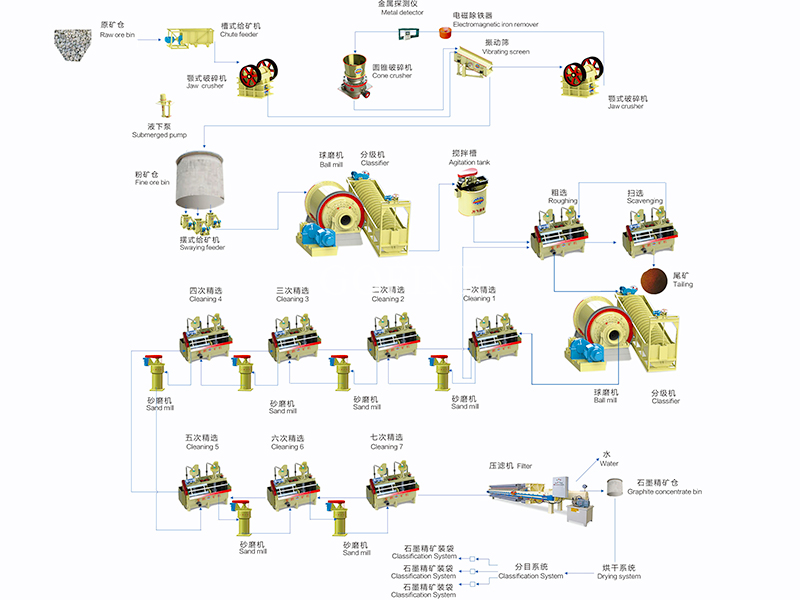
The spiral classifier is a commonly used classification device that forms a closed-loop cycle with a ball mill. Its working principle utilizes the difference in settling velocity of solid particles in a liquid for classification. The equipment mainly consists of a tank, a spiral device, a transmission device, and a lifting mechanism. The spiral device rotates within the tank, stirring the slurry and conveying coarse sand to the ball mill for regrinding.
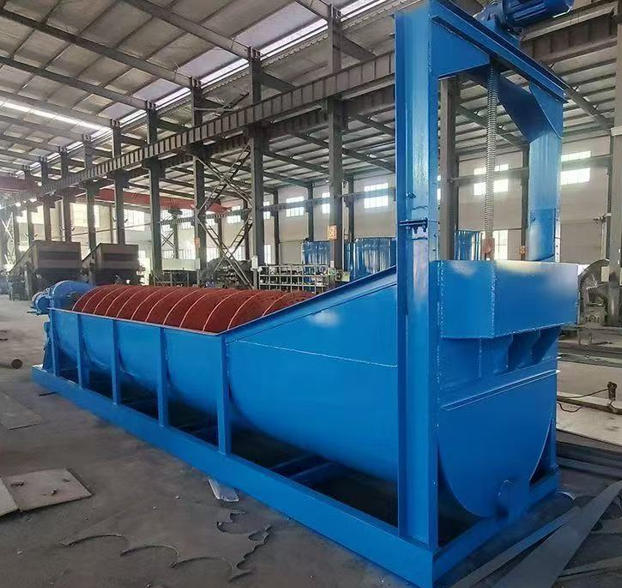
When the slurry enters the classifier tank through the feed inlet, fine particles overflow as overflow product, while coarse particles settle to the bottom and are pushed upwards by the spiral blades to be discharged through the upper sand outlet. The classification particle size is mainly affected by factors such as slurry concentration, spiral rotation speed, and overflow weir height. The spiral classifier has advantages such as simple structure, stable operation, and convenient operation.
The spiral classifier is suitable for coarse grinding and classification operations where the product particle size is greater than 0.5mm. When the grinding particle size is finer, the classification efficiency of the spiral classifier will decrease; in this case, a hydrocyclone should be considered as the classification device. Spiral classifiers are still widely used in iron ore beneficiation, but the range of grinding fineness test values needs to be reasonably determined based on the ore’s dispersive characteristics.
Product Inquiry

Contact us
Address: Wulong Industrial Park, Xingyang City, Zhengzhou City, Henan Province
Contact:Richard
Phone:+86 151 3866 6240
Mail:richard@zzgofine.com
Online consultation
Copyright © 2027 All Rights Reserved.