
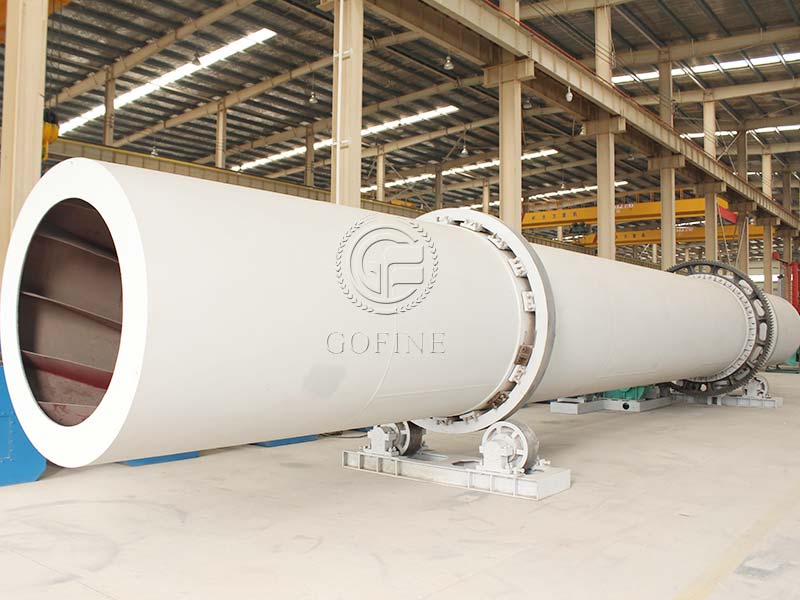
Drum dryer
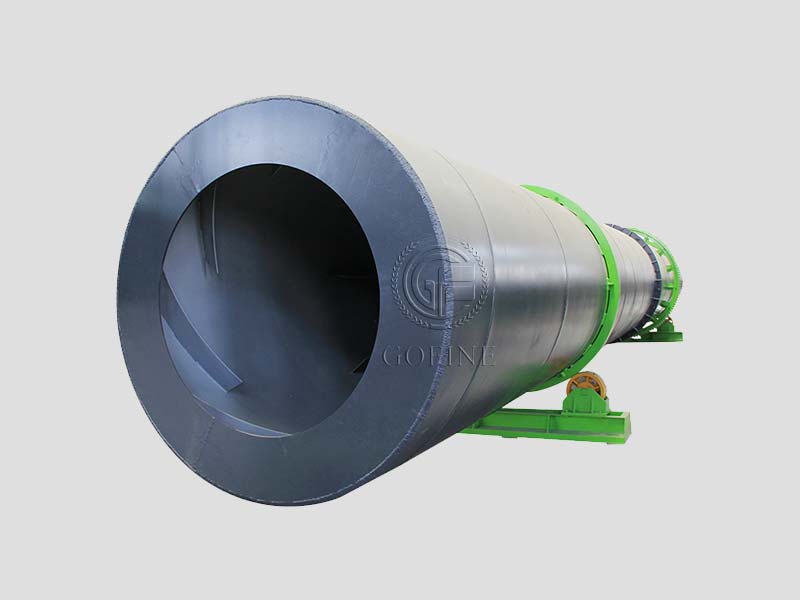
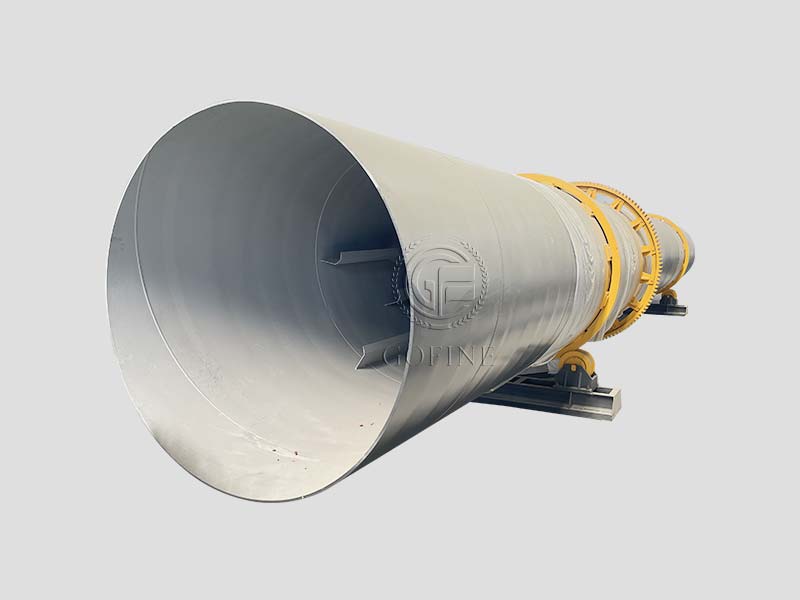
Product Introduction: The rotary drum dryer is a commonly used continuous drying equipment in the mining, mineral processing, sand and gravel, and coal slime industries. It is mainly used to dry mineral powder, slag, tailings, coal slime, sand, and gravel with high moisture content to a suitable moisture content, facilitating subsequent transportation, storage, sorting, or further processing.
Working Principle:
The rotary drum dryer mainly utilizes hot air to contact organic fertilizer granules, removing moisture from the material to achieve the drying purpose. Typically, after drying, the moisture content of granular organic fertilizer is approximately 13%. A conveyor belt feeds the material into the dryer, and the exhaust gas generated during drying enters a dust collector for evaporation treatment.
Equipment Structure:
The rotary drum dryer consists of a rotating drum, a reducer, and a motor. Multiple baffles are installed inside the drum to prevent material from adhering to the inner wall. Furthermore, the rotary drum dryer is installed at a certain inclination angle (3-5 degrees), allowing the material to slowly pass through the drum during the drying process, thus ensuring thorough drying. The motor provides power for the drum’s rotation. Simultaneously, the reducer converts the power into a suitable speed and increases the torque, thereby providing continuous power to the dryer.
Equipment Advantages:
High Adaptability: It can process a wide range of materials, including metallic concentrates, non-metallic mineral powders, coal slime, and slag.
Large Processing Capacity: Highly mechanized, it enables continuous operation, meeting the needs of large-scale industrial production.
Stable Operation: Simple structure, easy operation, low running resistance, and relatively easy maintenance.
Uniform Drying: The material is repeatedly spread and fully contacts the hot air, ensuring uniform drying of the final product.
Equipment parameters:
| Product specifications | Motor power (kW) | Reducer model | Intake temperature (℃) | Installation tilt angle (degrees) | Speed (r/min) | Production capacity (t/h) |
| GFHG-0808 | 5.5 | ZQ250 | ≥300 | 3-5 | 6 | 1-2 |
| GFHG-1010 | 7.5 | ZQ350 | ≥300 | 3-5 | 6 | 2-4 |
| GFHG-1212 | 7.5 | ZQ350 | ≥300 | 3-5 | 6 | 3-5 |
| GFHG-1515 | 11 | ZQ400 | ≥300 | 3-5 | 6 | 4-6 |
| GFHG-1616 | 15 | ZQ400 | ≥300 | 3-5 | 6 | 6-8 |
| GFHG-1818 | 22 | ZQ500 | ≥300 | 3-5 | 5.8 | 7-12 |
| GFHG-2020 | 37 | ZQ500 | ≥300 | 3-5 | 5.5 | 8-15 |
| GFHG-2222 | 37 | ZQ500 | ≥300 | 3-5 | 5.5 | 8-16 |
| GFHG-2424 | 45 | ZQ650 | ≥300 | 3-5 | 5.2 | 14-18 |
Performance Advantages
Performance Advantages

Intelligent
Automatic analysis of operating status and early warning of abnormal conditions allow you to be fully aware of how your equipment is running.

Fully automated
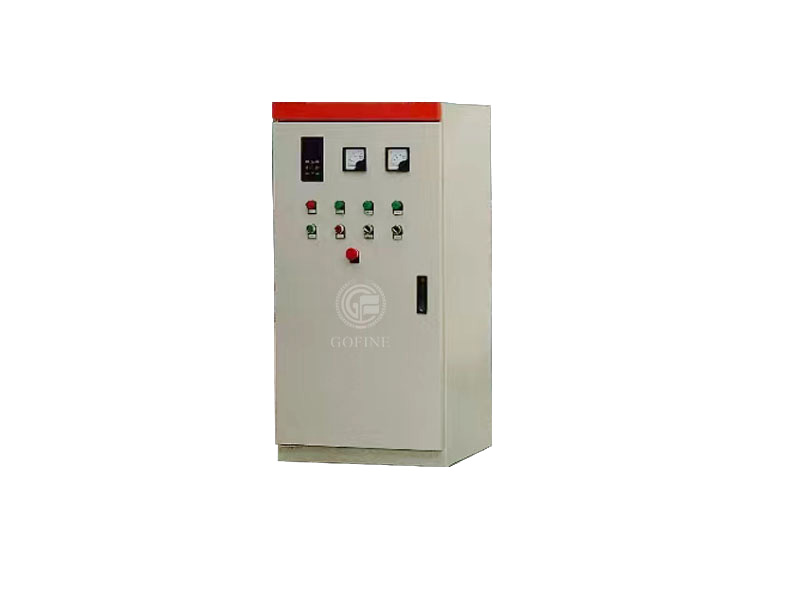
From crushing and feeding to concentrate output, the entire production line can be started and stopped sequentially with a single button.

Safety
The equipment is equipped with multiple mechanical interlocks and electrical protection devices to ensure the safety of personnel and equipment.

Highly adaptable
The equipment can process various types of ore, from soft limestone to high-hardness iron ore, and is adaptable to both dry and wet processing methods.
Product Inquiry
Related Cases

Contact us
Address: Wulong Industrial Park, Xingyang City, Zhengzhou City, Henan Province
Contact:Richard
Phone:+86 151 3866 6240
Mail:richard@zzgofine.com
Online consultation
Copyright © 2027 All Rights Reserved.