
Flotation machine
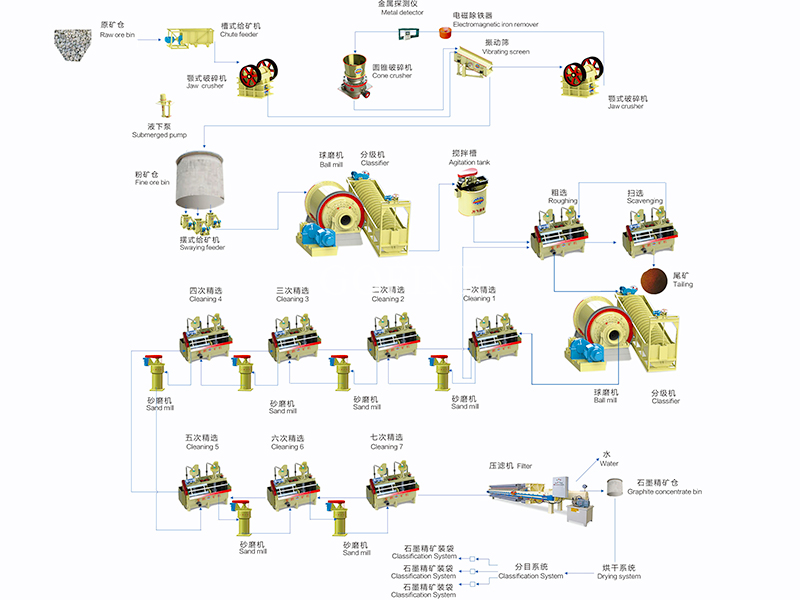
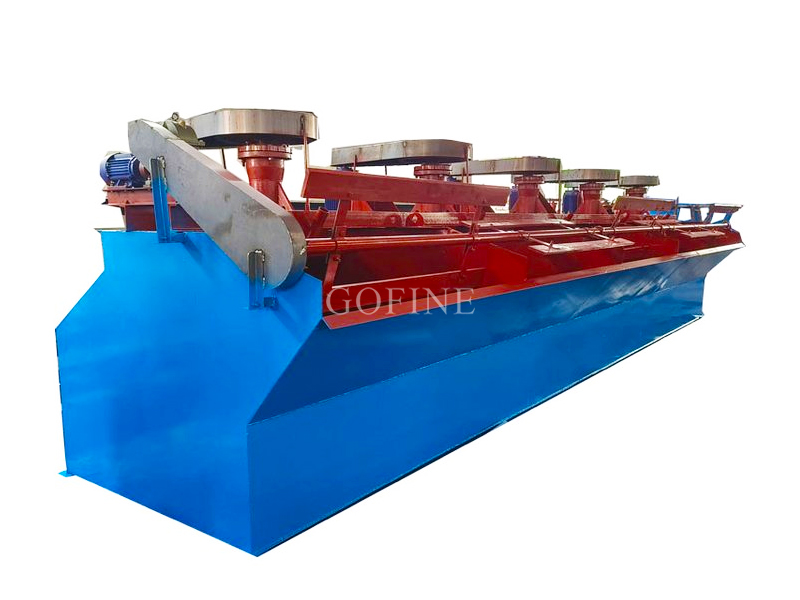
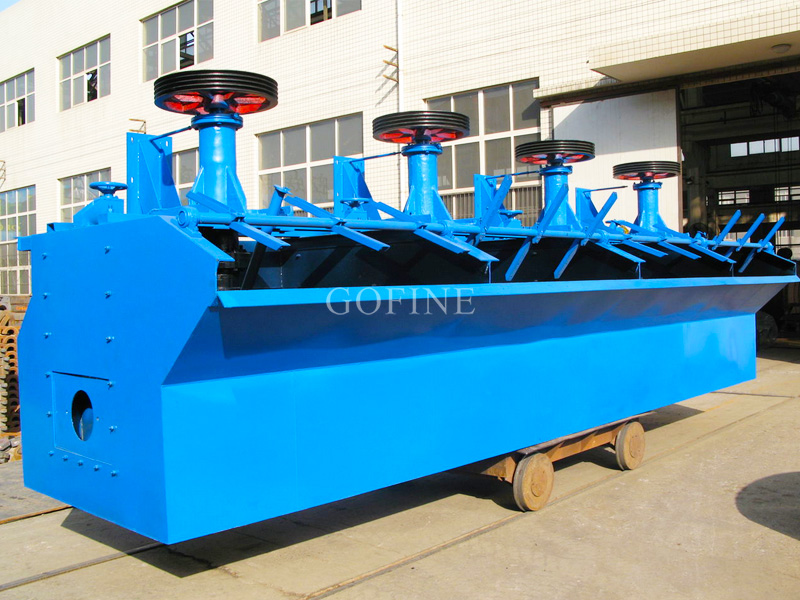
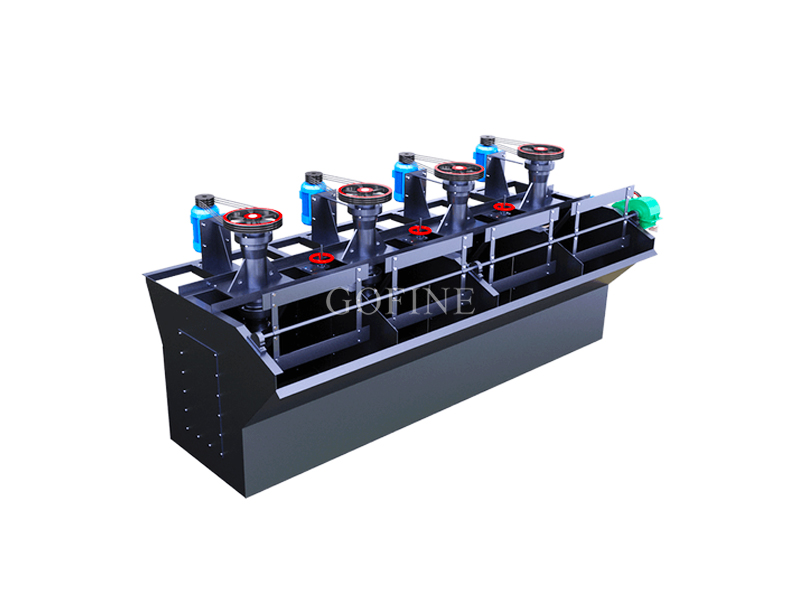
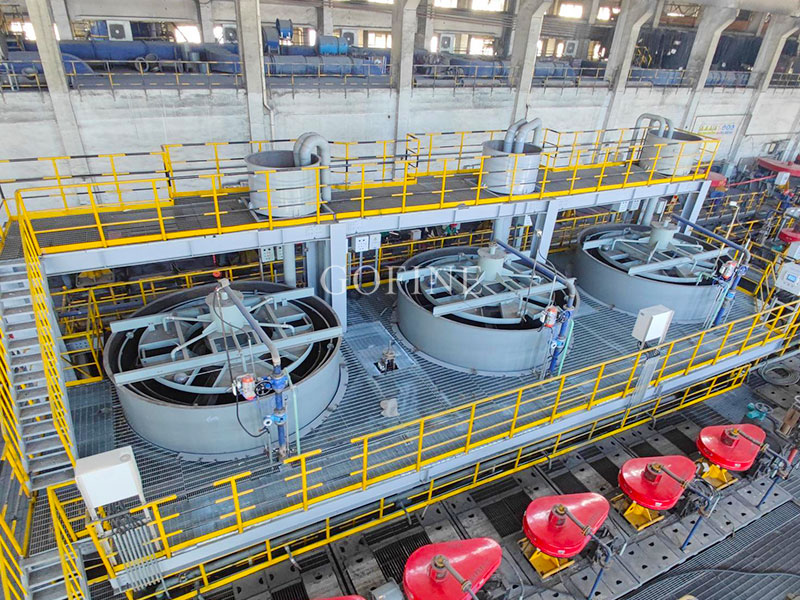
The flotation machine is the core equipment in mineral flotation technology. It primarily utilizes the differences in surface wettability (hydrophobic/hydrophilic) of different minerals. Through aeration, agitation, and reagent addition, the valuable minerals adhere to air bubbles and float to the surface, achieving separation from gangue and impurities. It is widely used in the beneficiation of non-ferrous metals, rare metals, and non-metallic minerals such as gold, copper, lead, zinc, iron, molybdenum, and nickel.
Basic Structure:
Tank: Welded steel plate, corrosion-resistant, used to hold the slurry and form the flotation space.
Agitation and Aeration Mechanism: Motor, reducer, main shaft, impeller, stator, responsible for agitating the slurry, drawing in air, and breaking up air bubbles.
Aeration System: Air inlet pipe, air inlet regulating valve, controlling the aeration volume.
Foam Scraping Mechanism: Scraper, scraper motor, continuously scrapes out concentrate froth.
Mid-Ore Circulation/Level Regulation Device: Controls the slurry level and flow rate to ensure stable separation.
Frame and Transmission System: Supports the entire machine and ensures stable operation.
Working Principle:
After the slurry enters the flotation cell, it is agitated and aerated, forming a large number of fine, uniform bubbles.
Hydrophobic useful mineral particles are adsorbed onto the surface of the bubbles and float to the surface, forming a mineralized froth layer.
Hydrophilic gangue and waste rock remain in the slurry and are discharged as tailings.
The froth scraping mechanism scrapes off the froth, yielding concentrate, thus achieving mineral separation and enrichment.
Equipment Features:
Excellent separation effect: High enrichment ratio, allowing for multiple roughing, cleaning, and scavenging processes to improve recovery rate and grade.
Wide applicability: Can float various minerals such as gold, copper, lead, zinc, molybdenum, nickel, fluorite, and graphite.
Large throughput: High output per unit and unit, suitable for large-scale continuous production.
Stable and reliable operation: Mature and durable structure, adaptable to harsh mining conditions.
Easy operation and maintenance: Liquid level, aeration rate, and reagents are all adjustable; few vulnerable parts.
Flexible process flow: Can be connected in series or parallel to form different flotation process flows.
Equipment Parameters:
| Material | VOLUME(m³) | Impeller diameter(mm) | Capacity(t/h) | Stirring motor(kw) | Scraper motor(kw) | Chute weight(kg) | Single-slot outer dimensions(mm) |
| SF0.37 | 0.37 | 300 | 0.2-0.4 | 2.2 | 0.75 | 445 | 700×700×750 |
| SF0.7 | 0.7 | 350 | 0.3-1.0 | 3 | 0.75 | 600 | 900×1100×950 |
| SF1.0 | 1.0 | 400 | 0.45-1.1 | 5.5 | 0.75 | 978 | 1000×1000×1000 |
| SF1.2 | 1.2 | 450 | 0.6-1.6 | 5.5 | 0.75 | 1240 | 1050×1050×1050 |
| SF2.0 | 2.0 | 550 | 1.5-3.0 | 7.5 | 1.1 | 1879 | 1400×1400×1150 |
| SF2.8 | 2.8 | 550 | 1.5-3.5 | 11 | 1.1 | 2242 | 1600×1600×1150 |
| SF4.0 | 4.0 | 650 | 2.0-4.0 | 15 | 1.5 | 2660 | 1900×2000×1200 |
| SF8.0 | 8.0 | 760 | 4.0-8.0 | 30 | 1.5 | 4043 | 2250×2850×1400 |
Performance Advantages
Performance Advantages

Intelligent
Automatic analysis of operating status and early warning of abnormal conditions allow you to be fully aware of how your equipment is running.

Fully automated
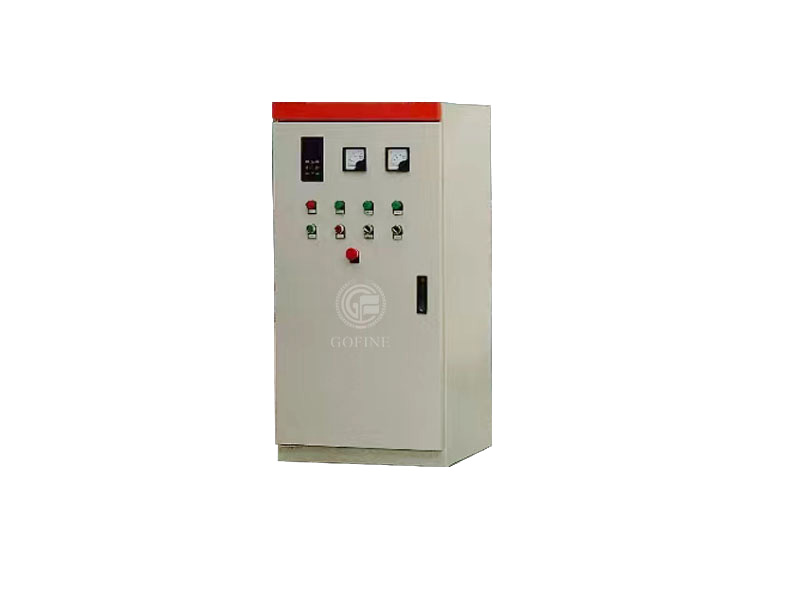
From crushing and feeding to concentrate output, the entire production line can be started and stopped sequentially with a single button.

Safety
The equipment is equipped with multiple mechanical interlocks and electrical protection devices to ensure the safety of personnel and equipment.

Highly adaptable
The equipment can process various types of ore, from soft limestone to high-hardness iron ore, and is adaptable to both dry and wet processing methods.
Product Inquiry
Related Cases

Contact us
Address: Wulong Industrial Park, Xingyang City, Zhengzhou City, Henan Province
Contact:Richard
Phone:+86 151 3866 6240
Mail:richard@zzgofine.com
Online consultation
Copyright © 2027 All Rights Reserved.