
Rod Mill
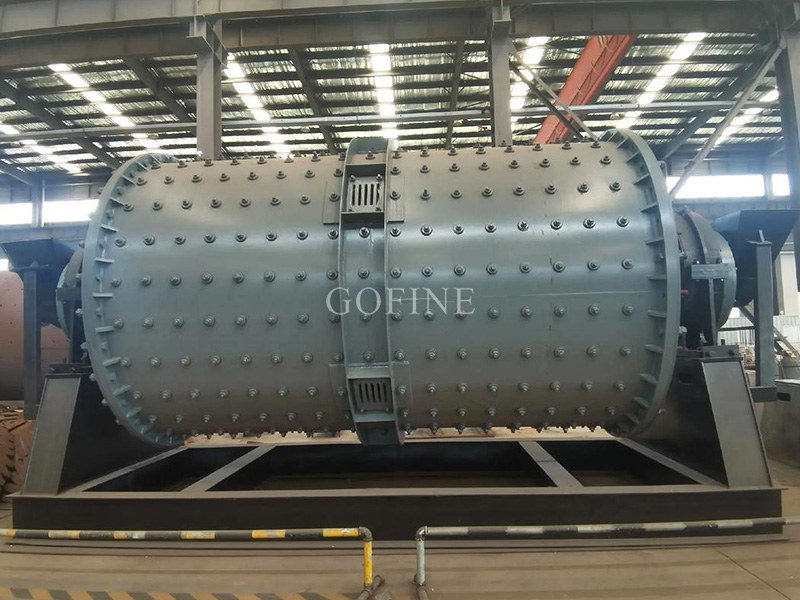
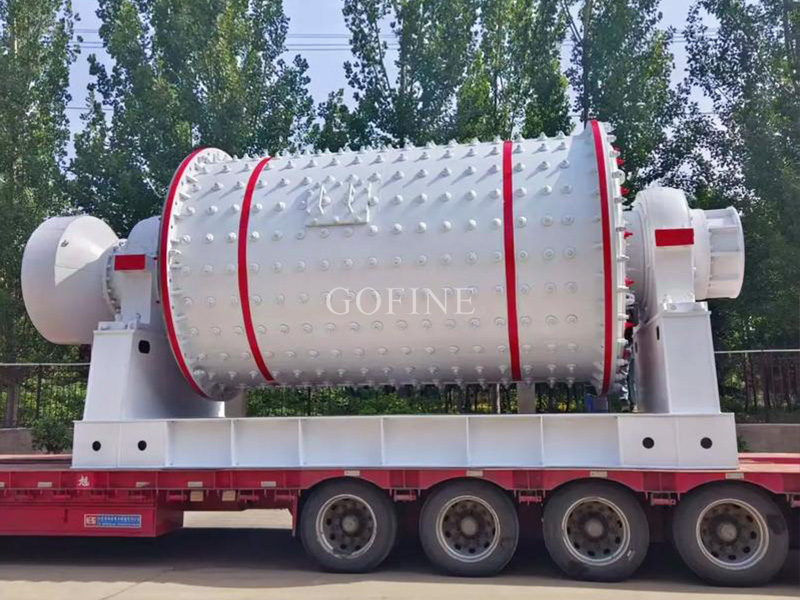
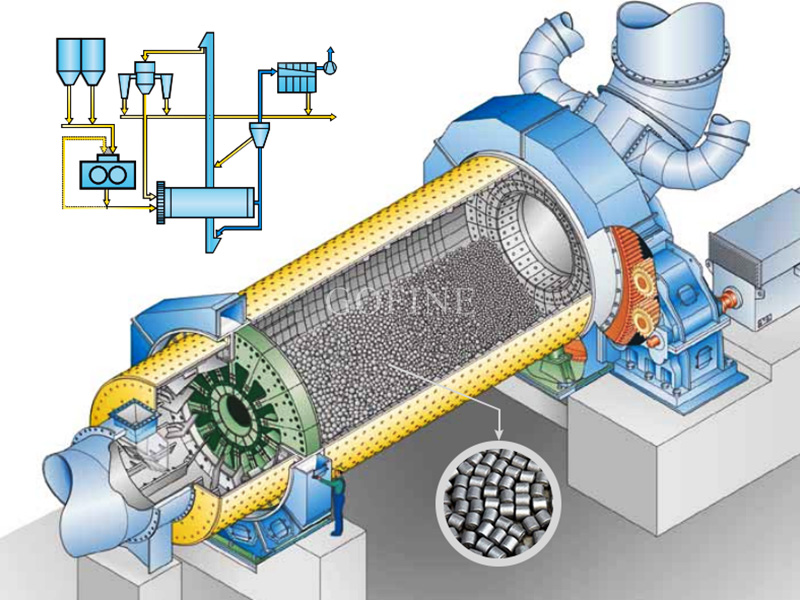
A rod mill is a grinding equipment that uses steel rods as grinding media. Due to its unique crushing method, it is particularly adept at producing qualified products with uniform particle size and minimal over-grinding.
Core Structure:
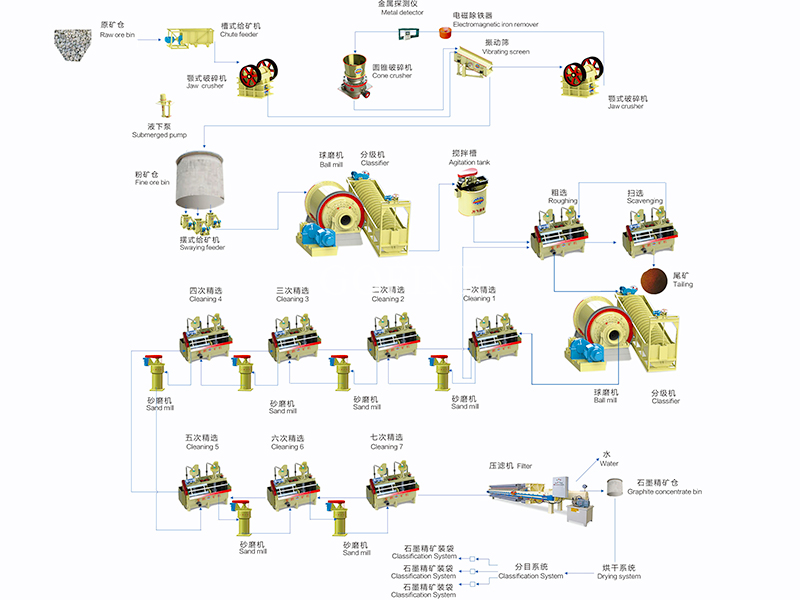
It mainly consists of a horizontal rotating cylinder (with wear-resistant liners), a hollow shaft feed/discharge end, a transmission system (motor + reducer + large gear ring), main bearings and a lubrication and cooling system, electrical control, and grinding media (high-carbon steel rods, 50–100mm in diameter, slightly shorter than the cylinder). It is classified into overflow type and peripheral discharge type based on discharge.
Working Principle:
Equipment Start-up: The motor drives the cylinder to rotate slowly through the reducer.
Media Movement: The steel rods inside the cylinder are lifted by centrifugal force and friction, and fall in a cascading or throwing motion after reaching a certain height.
Crushing Process: The falling steel rods form line contact with the material. Within the rod group, larger particles are preferentially crushed by the steel rods, while smaller particles can pass through the gaps between the rods, avoiding over-grinding. This “coarse-to-fine” process is called selective crushing, and it’s key to achieving uniform product particle size.
Product Discharge: The finely ground material overflows through the discharge port with the slurry, completing the entire grinding process.
Equipment Advantages:
Minimal Over-grinding: The steel rods use line contact grinding, similar to a “bar screen,” allowing fine materials to pass directly without repeated grinding, resulting in uniform finished particle size.
Good Particle Shape and Consistent Particle Size: Suitable for coarse and medium grinding, with stable output particle size, especially suitable for gravity separation and pre-grinding before sand making.
Large Processing Capacity, Suitable for Open-Circuit Grinding: Fast discharge, achieving ideal particle size without closed-circuit operation, and a simple process flow.
Strong Adaptability to Feed Fluctuations: Less prone to clogging or jamming even with large variations in feed particle size.
Uniform Steel Rod Wear and Easy Replacement: Compared to steel balls, the rod mill media is more uniform, making maintenance intuitive.
Equipment Parameters:
| Model | Feed particle size(mm) | Discharge particle size(mm) | Output(t/h) | Process feed rate(t/h) | Load factor(%) | Work rate(%) |
| MBS0918 | 900 | ≤25 | 0.833-0.147 | 0.62-3.2 | 18.5 | 5500 |
| MBS0924 | 900 | ≤25 | 0.833-0.147 | 0.81-4.3 | 22 | 6100 |
| MBS1224 | 1200 | ≤25 | 0.833-0.147 | 1.1-4.9 | 30 | 12000 |
| MBS1530 | 1500 | ≤25 | 0.833-0.147 | 2.4-7.5 | 75 | 16800 |
| MBS1830 | 1830 | ≤25 | 0.833-0.147 | 4.8-11.6 | 130 | 29000 |
| MBS2130 | 2100 | ≤25 | 0.833-0.147 | 14-35 | 155 | 34800 |
| MBS2136 | 2100 | ≤25 | 0.833-0.147 | 19-43 | 180 | 37000 |
| MBS2430 | 2400 | ≤50 | 0.833-0.147 | 25-65 | 245 | 54000 |
| MBS2442 | 2400 | ≤50 | 0.833-0.147 | 45-65 | 355 | 74500 |
| MBS2736 | 2700 | ≤50 | 0.833-0.147 | 32-86 | 380 | 86000 |
| MBS2745 | 2700 | ≤50 | 0.833-0.147 | 60-85 | 500 | 88000 |
| MBS3245 | 3200 | ≤50 | 0.833-0.147 | 64-180 | 630 | 137000 |
Performance Advantages
Performance Advantages

Intelligent
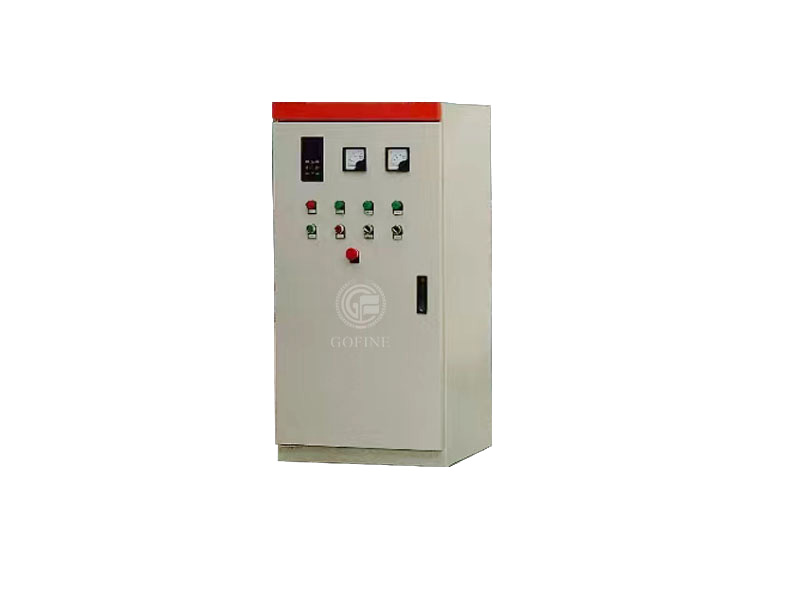
Automatic analysis of operating status and early warning of abnormal conditions allow you to be fully aware of how your equipment is running.

Fully automated
From crushing and feeding to concentrate output, the entire production line can be started and stopped sequentially with a single button.

Safety
The equipment is equipped with multiple mechanical interlocks and electrical protection devices to ensure the safety of personnel and equipment.

Highly adaptable
The equipment can process various types of ore, from soft limestone to high-hardness iron ore, and is adaptable to both dry and wet processing methods.
Product Inquiry
Related Cases

Contact us
Address: Wulong Industrial Park, Xingyang City, Zhengzhou City, Henan Province
Contact:Richard
Phone:+86 151 3866 6240
Mail:richard@zzgofine.com
Online consultation
Copyright © 2027 All Rights Reserved.